



Telegram is a cloud-based messaging platform first released in 2013. It functions similarly to other popular messaging applications like WhatsApp and Signal but distinguishes itself through several notable features — most significantly, the ability to host groups of up to 200,000 members and channels with unlimited subscribers. Because it is cloud-based, users can access their messages and data across multiple devices seamlessly.
Telegram has built a strong reputation for privacy. Standard chats use client-server encryption, while users who want stronger protection can opt into "Secret Chats," which are end-to-end encrypted and invisible even to Telegram itself.
The History of Telegram
In 2024, Telegram's founder Pavel Durov was arrested in France on allegations that the platform had become a vehicle for distributing child sexual abuse material (CSAM) and promoting hate speech. The arrest marked a turning point for the platform. Shortly afterward, Durov announced that Telegram would begin sharing phone numbers and IP addresses with authorities when presented with a valid legal basis for the request.
For OSINT investigators, this signals a meaningful, if limited, shift in the platform's historically opaque relationship with law enforcement.
Despite ongoing scrutiny, Telegram remains one of the most widely used messaging platforms in the world, surpassing 1 billion monthly active users in 2026. The majority of users access the platform for free, though approximately 15 million subscribers pay for Telegram Premium, which offers benefits including 4 GB file uploads, maximum download speeds, ad-free browsing, and a profile badge.
In this guide, we will demonstrate how investigators and OSINT analysts can collect intelligence from Telegram. We’ll cover the platform's structure, its search capabilities, and systematic methods for investigating users, channels, and groups — along with the tools and techniques that make each step more effective.
But first, let’s discuss why Telegram is so important for OSINT analysts and the main challenges you can expect to face when collecting intelligence from the platform.
Why Telegram is Valuable for OSINT Investigators
Telegram's combination of massive reach, minimal moderation, and unique structural features has made it one of the most important platforms for OSINT investigators. It serves as a venue for everything from real-time crisis reporting to cybercriminal coordination, and understanding how to work within it effectively can yield intelligence that is difficult or impossible to find elsewhere.
Let’s break down why this platform is so important for OSINT investigations:
1. It hosts a large volume of publicly accessible data
Telegram hosts an enormous number of public groups and channels covering virtually every topic imaginable. To put the scale in perspective: in 2025 alone, Telegram reported blocking over 44 million groups and channels. Nearly one million of those groups were linked to CSAM and over 236,000 were associated with terrorism (see Figure 1).
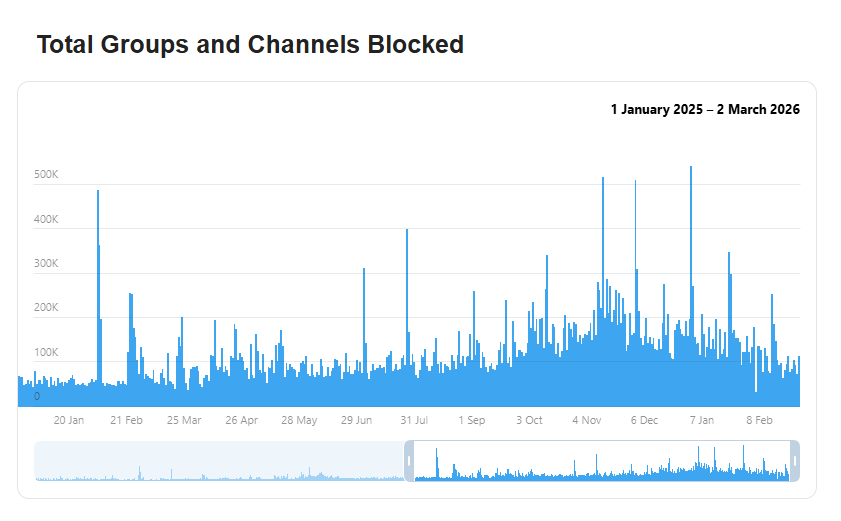 Figure 1 – The total Telegram Groups and Channels blocked in one year give a hint at the massive number of
Telegram groups and channels that existed on the platform | Source: https://telegram.org/moderation
These figures are not cited to dwell on the platform's darker corners, but to illustrate just how vast and active the Telegram ecosystem is.
Unlike most messaging platforms, which either limit message history or purge content after a set period, Telegram preserves all messages in public groups and channels indefinitely — unless an administrator manually enables deletion or auto-expiry. This gives investigators the ability to review long historical records of activity across a wide range of content types, including text, images, videos, audio files, documents, and leaked databases.
2. It is widely used by cybercriminals
Telegram's ease of use, perceived anonymity, and light moderation have made it a preferred communication channel for threat actors of all kinds.
For cybersecurity investigators specifically, monitoring Telegram allows them to:
- Track the distribution of malware, like ransomware, and exploit kits.
- Identify Indicators of Compromise (IOCs) used by attackers, such as malicious IP addresses, domains, and file hashes shared in real time.
- Reveal data breaches before they are even announced on the dark web or other news outlets.
- Monitor threat actor TTPs (Tactics, Techniques, and Procedures), as they are discussed openly in public groups.
For example, the pro-Russian hacktivist groups KillNet and Anonymous Sudan, for example, used Telegram extensively to coordinate large-scale Distributed Denial-of-Service (DDoS) campaigns.
3. It operates with limited moderation compared to mainstream platforms
Platforms like Facebook, YouTube, and X invest heavily in proactive content filtering. Telegram, by contrast, operates primarily on a reactive moderation model, taking action mostly when content violates its core Terms of Service, including:
- CSAM
- Inciting violence
- Promoting terrorism
- Facilitating the purchase of illegal goods
- Drug trafficking
It is worth noting that Telegram's moderation is directed almost entirely at public groups and channels. Private groups are largely inaccessible to platform review unless a participant submits a formal report.
For investigators, this means that content — extremist propaganda, leaked documents, hacking tutorials — that would be removed within hours on other platforms may remain accessible on Telegram for much longer, providing a wider window for collection and analysis.
One universal exception applies across both public and private spaces: photos and videos are automatically scanned for known illegal content, primarily CSAM, using hash-matching technology.
4. It provides real-time intelligence during crises and protests
Telegram has established itself as a go-to platform during civil unrest, protests, and geopolitical crises. Activists, journalists, and government officials use it to communicate, coordinate, and share photos and videos with large audiences in real time.
During the Russia-Ukraine conflict, for example, many Telegram channels functioned as primary news outlets, publishing footage, updates, and military movements before any mainstream media outlet reported them.
For investigators, this real-time flow of information enables live incident tracking, geolocation of media files, and the ability to view events from multiple perspectives simultaneously — including both those of protesters and government actors — providing a more complete picture of fast-moving situations.
5. It serves as a bridge between the surface web and the dark web
Telegram frequently functions as a connector between the open internet and the dark web (encrypted networks such as the TOR network).
It is common during Telegram investigations to encounter links to onion services, dark web forums, and illicit marketplaces. Many threat actors use Telegram as a customer support channel after completing transactions on the dark web, reducing the friction of accessing Tor-based services for their customers.
Cybercriminal groups also commonly announce freshly stolen data on Telegram channels, often providing a link to the full dataset hosted on the dark web. This makes Telegram one of the earliest places where new data breaches surface, giving investigators an opportunity to identify and document them before they circulate widely.
The Challenges of Collecting OSINT from Telegram
Before diving into investigative techniques, it is important to understand the obstacles you are likely to encounter. They are presented here in rough order of how frequently they will affect your work.
1. Private groups and channels are largely inaccessible
A significant portion of meaningful activity on Telegram takes place in private groups and channels. These are invite-only communities that do not appear in search results and cannot be indexed by third-party tools. Accessing a private space requires either receiving a direct invitation link or gaining entry through a source already inside the group.
Even when access is obtained, member lists may be hidden depending on the group's privacy settings. Investigators should also be aware that invitation links can be set to expire after a certain period or after a set number of uses, meaning a link collected today may be invalid tomorrow.
2. Content can disappear without warning
Telegram gives users and administrators significant control over content permanence.
Individual users can set messages to auto-delete after a defined period. Channel and group owners can delete entire communities outright, and Telegram does not retain or archive this content once it is gone.
This makes timely collection critical. Intelligence that exists today may be unrecoverable tomorrow.
Establishing a habit of capturing and preserving relevant content as soon as it is found is essential for any OSINT on Telegram. We will cover evidence preservation methods in more detail later in this guide.
3. The platform's built-in search is limited
Telegram's native search functionality is significantly weaker than what investigators are accustomed to on platforms like Facebook or X.
There is no ability to filter by date, file type, or geographic location. Search results are also largely limited to groups and channels the investigator has already joined, with only a partial "global search" that surfaces a narrow slice of the broader ecosystem.
Third-party indexing tools extend this capability but are themselves limited to what they have already crawled — primarily large, well-established public groups and channels. Private groups remain entirely out of reach through these services.
4. The volume of data can be overwhelming
Active Telegram groups and channels generate enormous amounts of content daily.
In a politically active group during a major event, thousands of messages, images, and videos may be posted within hours. Manual review of this volume is not realistic, and investigators working without automated collection and filtering tools will miss important signals.
Identifying the right tools for the job — and knowing how to use them efficiently — is essential before beginning any large-scale Telegram investigation.
5. Content comes in many formats, each requiring a different workflow
A substantial portion of content shared on Telegram is not text. Images require reverse image searches and, when they contain text, optical character recognition (OCR) to extract it.
Videos require frame-by-frame analysis to identify individuals, locations, and visible text.
Voice messages must be transcribed before keyword analysis can be applied.
Documents shared as PDFs or MS Office files may contain embedded metadata — including author names, GPS coordinates, creation timestamps, and revision history — but should be treated with caution, as MS Office files in particular can contain malicious macros and should be opened only in an isolated sandbox environment.
6. Language diversity creates translation gaps
Telegram's global user base means that a significant proportion of relevant content will be in languages other than English — commonly Russian, Arabic, Farsi, and various South and Southeast Asian languages. (See Figure 2)
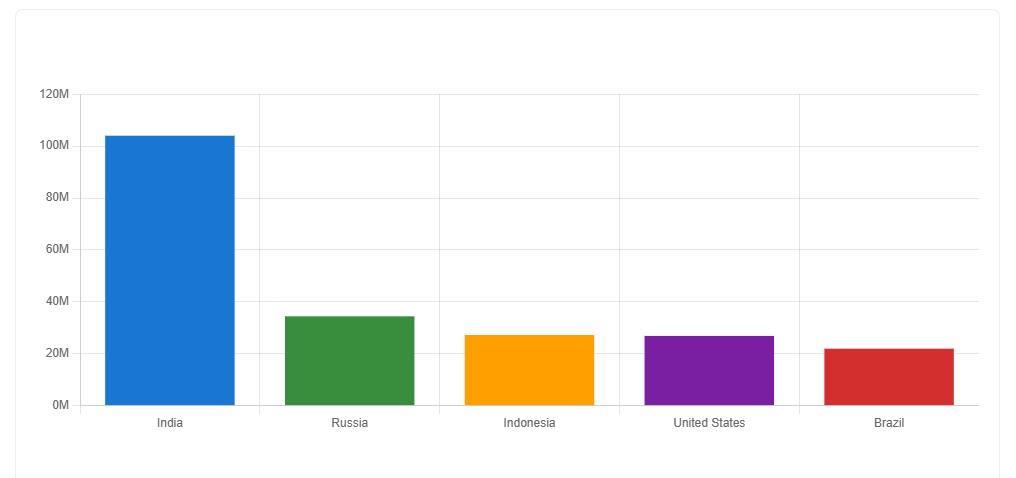 Figure 2 - Top five nationalities on Telegram, as we note each one communicates in a different language
| Source: https://www.quantumrun.com/consulting/telegram-user
Automated translation tools handle standard usage reasonably well but struggle with regional dialects, coded language, and slang. This is a meaningful limitation in practice: a technical discussion in a Russian-language cybercriminal group, for example, may contain highly specific jargon that a machine translation renders inaccurately or incomprehensibly.
Some threat actors also deliberately use misspellings and non-Latin scripts to evade keyword-based monitoring systems, adding another layer of difficulty for investigators working across language barriers.
7. Anonymity makes attribution difficult
Telegram accounts require only a phone number to create, and in practice that number can come from a temporary or virtual phone service such as TextNow or SMS-Activate.
Once an account is created, the user can hide their phone number entirely and interact using only a username. Linking a Telegram account to a real-world identity is therefore rarely straightforward, particularly when the user has kept their profile minimal.
In these cases, investigators must rely on indirect indicators — writing style, posting behavior, activity timing, recurring topics, and contextual clues — to correlate a Telegram account with identities found on other platforms. This process is time-consuming and increases the risk of misattribution if not approached carefully.
8. Your presence on the platform is not invisible
This challenge is often overlooked but deserves prominent mention: when you view a Telegram profile, join a group, or interact with content, your account may be visible to the people you are investigating. Group member lists, for example, are often accessible to all members.
Investigators who use a personal or professionally linked Telegram account for OSINT work risk exposing their identity or alerting a target. Operating on Telegram for investigative purposes requires a purpose-built account managed with strict operational security practices. This is covered in more detail in the OPSEC section of this guide.
Telegram Basics: Channels, Groups, and Bots
Telegram organizes communication into three distinct formats: channels, groups, and bots. Understanding the differences between them is fundamental to knowing where to look for intelligence and what kind of information each is likely to yield.
Telegram Channels
Telegram channels are one-way broadcast tools. A channel administrator posts content that is distributed to all subscribers, but subscribers cannot post to the channel themselves, they can only react to posts. Channels can have an unlimited number of subscribers and can be managed by more than one administrator. In this way, channels function similarly to a newsletter or news feed.
Channels can be either public or private. Public channels are accessible to anyone, including users who do not have a Telegram account, and their contents can be partially indexed by third-party search tools. Private channels are accessible only via an invite link.
From an OSINT perspective, channels are where deliberate, curated messaging tends to live.
State-sponsored actors, hacktivist groups, criminal organizations, and terrorist groups all use channels to broadcast communications to large audiences. For example, during the Russia-Ukraine conflict, many Telegram channels served as the primary source of real-time battlefield updates and footage.
For investigators, channels are valuable for monitoring threat actor communications, tracking the spread of specific narratives or disinformation, and identifying relationships between operators through forwarded content and cross-channel promotion.
Channels can also help in the digital profiling of suspects. For example, a user subscribed to sports channels is likely to have interests in sports activities.
Telegram Groups
Telegram groups are interactive communities where all members can post messages, share files, and participate in discussions. A single group can hold up to 200,000 members and is managed by one or more administrators. Like channels, groups can be public or private.
Groups are rich with valuable intelligence. Member interactions expose relationships, internal disputes, operational planning, and behavioral patterns that curated channel posts rarely surface. An individual's posts and replies within a group can reveal their social circle, areas of expertise, emotional state, and affiliations.
Telegram Bots
Telegram bots are automated accounts built using the Telegram Bot API. They can:
- Send and receive all types of messages and media
- Present inline keyboards for users to respond to messages without using their device keyboard
- Respond to commands, such as /start, /help, /settings
- Execute any repetitive tasks — welcoming new group members, sending weather alerts or stock price changes, and more
For OSINT investigators, Telegram bots are relevant in two distinct ways.
First, as targets of investigation: cybercriminals increasingly use bots to facilitate illicit transactions, automate the distribution of stolen data, and operate command-and-control infrastructure for malware. Identifying a bot used by a criminal group can provide significant leads into their operations.
Second, as investigative tools: investigators can deploy or use existing bots to receive automated alerts when specific keywords appear in monitored channels or groups, enabling passive monitoring at scale without constant manual attention.
Public vs. Private Channels & Groups
The distinction between public and private spaces on Telegram has direct implications for how an investigation can be conducted and what legal and ethical considerations apply.
Public channels and groups are accessible to any user and can be partially indexed by third-party services. From a legal standpoint, content in public Telegram spaces is generally treated similarly to content on other public social media platforms — though investigators should always verify the specific legal framework applicable in their jurisdiction.
Private channels and groups are accessible only via an invite link generated by the group or channel administrator. They do not appear in Telegram search results, their contents cannot be indexed by external services, and they are largely inaccessible. That means content in private spaces has a high level of privacy, as only a limited number of users can access it.
For investigators, gaining access to a private space typically requires one of two approaches:
-
Using a purpose-built undercover account (a sock puppet account) to receive and act on an invitation link
-
Working with a cooperative source already inside the group.
Both approaches carry legal implications depending on jurisdiction and investigative context, and neither should be undertaken without understanding those implications clearly.
It is also worth noting that invitation links can be set to expire after a certain time period or after a specific number of uses, so keep in mind that invite links collected now may expire tomorrow or suddenly.
Understanding Message Forwarding and Its OSINT Value
When a Telegram user forwards a message to another user, group, or channel, the forwarded message retains metadata about its origin. Depending on the privacy settings of the original sender, this metadata can include the original poster's Telegram display name, a direct link back to the original post, and the timestamp of when the message was first published. (See Figure 3)
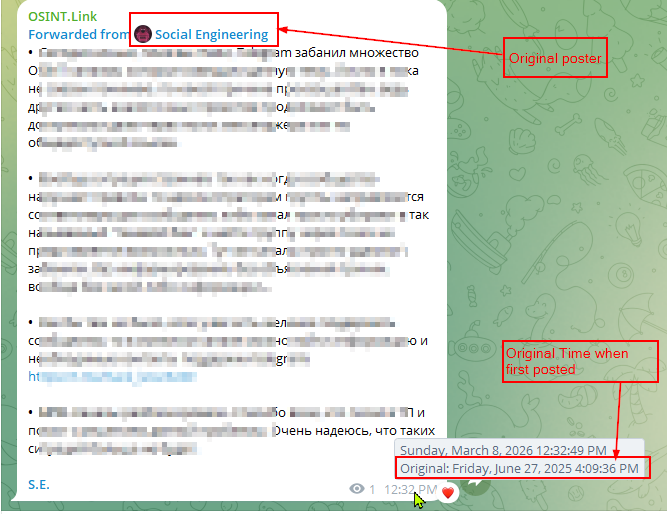 Figure 3 - Message forwarding in Telegram retains
important metadata about the message
This is a small feature with significant investigative implications.
1. Tracing content back to its source
The most immediate use of forwarding metadata is source identification. When a message has been forwarded multiple times across different groups and channels, following the chain back to its origin can reveal the original publisher — which may be a channel or account that the investigator had not previously identified. A single piece of content appearing repeatedly across unrelated Telegram spaces, all tracing back to the same source, is a strong signal that the source warrants closer investigation.
2. Mapping relationships between channels and accounts
Forwarding patterns also reveal relationships. When one channel consistently forwards content from another, it suggests a connection between the two: shared ownership, ideological alignment, or an operational partnership.
Mapping these forwarding relationships across a network of channels can expose the broader ecosystem surrounding a target, surfacing affiliated accounts that may not be linked in any other visible way.
3. Identifying disinformation campaigns
The speed and pattern with which content spreads across Telegram through forwarding can help investigators identify coordinated information operations. When the same message appears near-simultaneously across multiple unrelated channels, suggests coordinated amplification rather than organic sharing.
Tracking the propagation path of a specific piece of content, from its original post through each subsequent forward, can help establish both the origin of a campaign and the network being used to amplify it.
A practical note on privacy settings
Not all forwarded Telegram messages will expose the original sender’s identity. Telegram allows users to restrict forwarding attribution in their privacy settings. When enabled, forwarded messages may no longer link back to the sender’s profile and may show only unlinked attribution rather than a direct profile lead. In those cases, investigators may need to rely more on the message content, timestamp, and the channel or group through which it was forwarded.
Telegram Search and Discovery
Searching within Telegram is the most challenging part of an OSINT investigator's work, as Telegram's built-in search functionality provides minimal capabilities to search within the entire Telegram ecosystem.
Unlike other platforms like Facebook, X and Reddit, there is no centralized directory that indexes its contents, in addition to the fact that a large number of spaces, channels, and groups are private and very difficult to find.
Using Telegram's Built-In Search
Telegram's native search is the logical starting point for any investigation, but its limitations should be understood before relying on it.
The search box is located at the top left of the Telegram interface on the web version (see Figure 4).
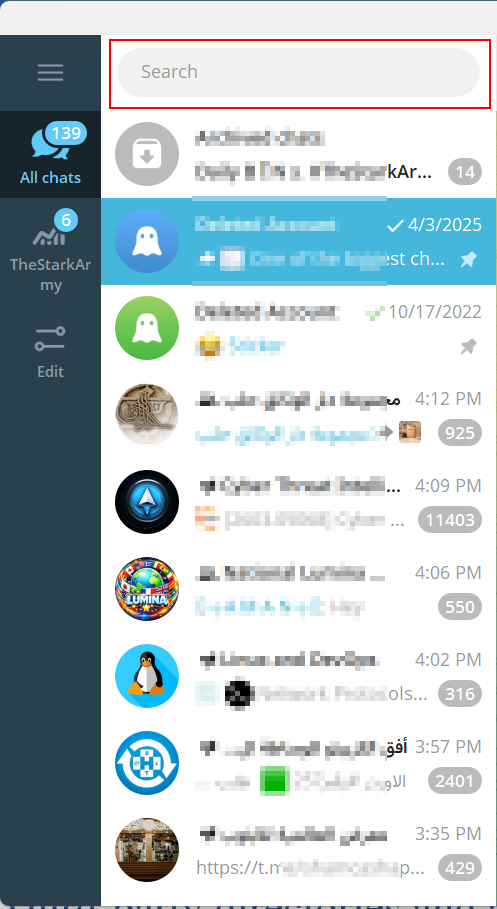 Figure 4 - Telegram search box (web app version)
The search returns results grouped into three categories (see Figure 5):
- Spaces the investigator is already a member of.
- Messages from groups and channels the investigator has already joined that contain the search keyword.
- “Global search results" that surface some public groups, channels, and bots from across the broader ecosystem. Because of the privacy settings, these results are usually quite narrow.
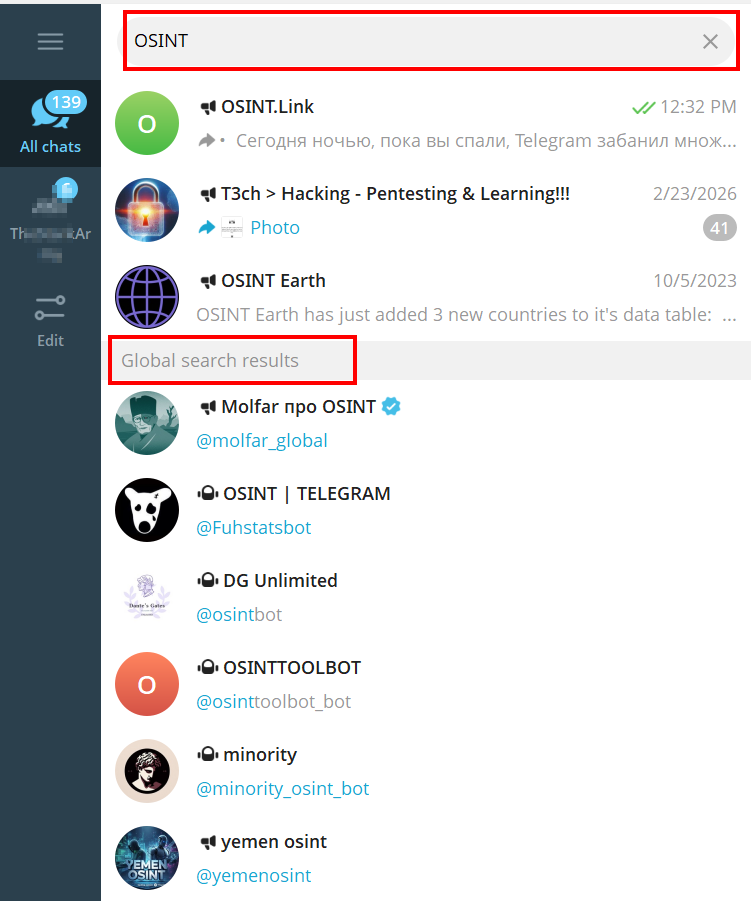 Figure 5 - Using Telegram's built-in search to search for a specific keyword
With those limitations in mind, the following practices will improve the quality of results from native search:
To search for a specific user, we can use their username, full name or phone number in the Telegram search box. It is worth noting that Telegram will prioritize your contact list when returning results. However, try to input the target full name or add more context in the search box, as it may appear in the global search result (see Figure 6).
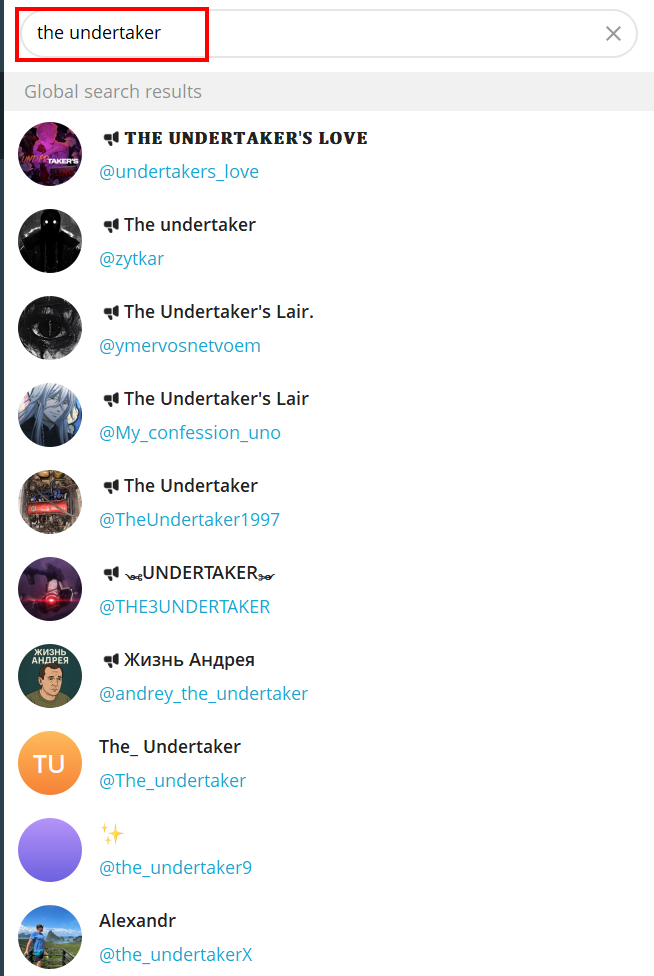 Figure 6 - Searching for a Telegram user using their username or full name
will return different results for both users and channels
When searching for a group or channel connected to a specific cultural or linguistic community, search in the relevant language. An Arabic-speaking hacking group, for example, may use the Arabic word "قرصنة" in its name, while a Russian group may use "взлом." Searching only in English will miss these entirely.
If you already have a target's username from another platform, try it directly in Telegram search. Many operators use consistent usernames across platforms, and the same handle may be used to name their Telegram channel or group.
If you know a target's exact username, enter it directly with the @ symbol (e.g., @channelname). This bypasses relevance ranking and surfaces the exact account immediately.
When you have limited information about a target, use partial keyword searches — a single word likely to appear in the group or channel name. Telegram ranks results by relevance, popularity, and exact match, so a search for "cracking" might surface results like "Cracking Community" as a channel name or "@cracking_pro" as a username, both of which may be worth investigating further.
Once you have identified a relevant channel or group, use its internal search function, accessible via the magnifying glass icon within the space, to search for specific messages, links, media, and documents within that community. (See Figure 7).
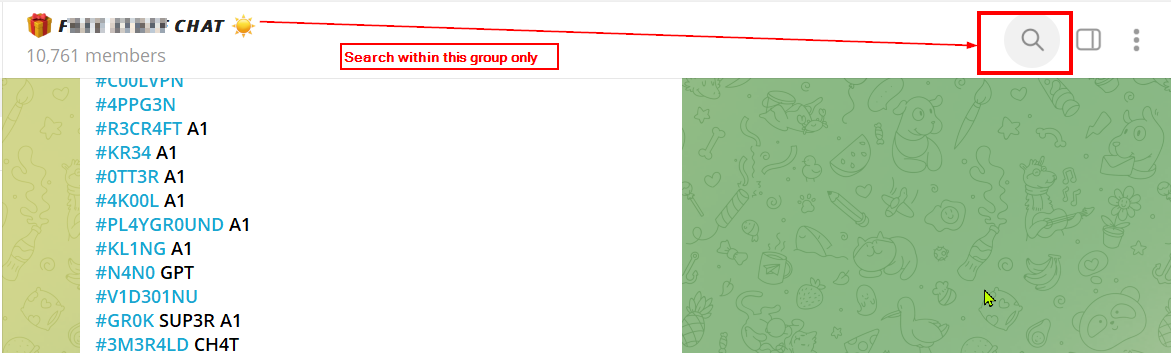 Figure 7 - Search within a group or channel only
If the group is organized into threads or topics, each thread should be searched individually, as content buried in a specific topic will not surface in a general group-level search. (See Figure 8).
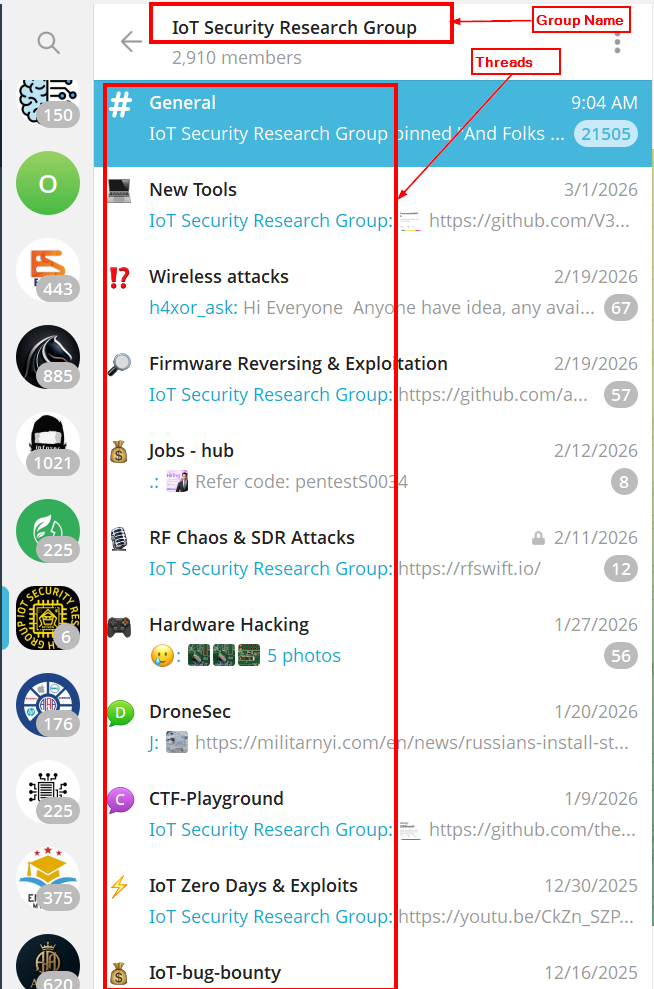 Figure 8 - A telegram group could be composed of a varying
number of topics/threads that should be researched individually
Also look for hashtags used to organize content within the group, such as #leaks, #osint, or #mobile_security, as searching for these directly can surface relevant material quickly.
Third-Party Indexing Tools, Directories, and Aggregators
Because Telegram's native search is limited to what the investigator has already joined plus a narrow global slice, third-party indexing services are an essential complement. These tools crawl and index public Telegram content independently, making it searchable in ways the platform itself does not support.
Their results are limited to what they have already indexed. But for public content, they could extend the investigator's reach considerably.
The most prominent services currently available are:
- Tgstat: Indexes a large catalog of public Telegram channels and groups and allows searches to be filtered by topic, country, language, and whether the space is public or private.
- Lyzem: A specialized Telegram search engine that indexes post text across channels and groups. For example, when searching for a specific keyword, we can discover new channels and groups that have this keyword, which helps us discover new spaces on Telegram. It also allows searching within Telegraph (Telegram's blogging tool) articles.
- Tgramsearch: Contains an index of more than 800000 Telegram channels. You can also browse available channels according to their category, for example, leak, arts, design, etc.
- Telegramchannels: Holds a database containing more than 11,540 channels, groups and bots. You can also browse spaces by category.
- Xtea: A Telegram search engine that helps you discover and find Telegram channels, groups, and bots within over 50,000 channels indexed across 143 countries.
No single tool indexes everything. Running the same search across multiple services could surface results that any individual tool may miss.
Cross-Platform Discovery
It is common for many Telegram channels and groups to promote their presence on other social media platforms, such as Facebook and X. This cross-platform promotion allows OSINT investigators to discover linked accounts in addition to finding low-visibility Telegram channels that are difficult to find via public directories.
On platforms like Facebook, X, and Reddit, the following search approaches are effective:
- Search for Telegram invite links directly. Many Telegram spaces are promoted using their invite links, and these links are frequently posted on other platforms. Here are some search queries to use:
- t.me "hacking"
- t.me "crypto signals"
- t.me "leaks"
Using both t.me and t.me/ as search terms is advisable, as posts use both formats.
- Search for the Telegram exact username of the user, channel or bot, for example:
- "@channelname"
- "@osintgate"
- "@Crypto_Signals_Org_Official"
- Search for Telegram invitation promotional phrases. For instance, many users promote their Telegram channels using specific promotional phrases such as:
- "join our telegram"
- "join my telegram channel"
- "telegram group link"
- "telegram signals"
OSINT investigators commonly use these phrases to locate hidden Telegram communities, newly created channels and scam operators promoting Telegram groups.
- Investigators can also combine target keywords with Telegram link indicators. For example:
- "t.me" malware
- "t.me" database leak
- "t.me" hacking
- Finally, we can search for hashtags that commonly contain Telegram links. For example:
- #telegramchannel
- #telegramgroup
- #telegramlink
- #jointelegram
- #telegramcommunity
- #telegramupdates
- #telegramtrading
- #cryptotelegram
- #telegramsignals
Finding Telegram Links in External Sources
Telegram invite links are commonly distributed outside the platform; for instance, we may find them embedded in websites, documents, forums, and messaging platforms. These places should be investigated as they may reveal links to private spaces on Telegram.
Before searching, you need to understand the general format of a Telegram invite link:
- Public username links: These are used to point to a public group, channel, bot or individual user. It has the following format: https://t.me/username. The main characteristics of such links are that they are publicly accessible, the username should be unique, and anyone can join these spaces (public groups and channels) directly without an invitation link.
- Private invite links: These are used for Telegram private groups and channels and have the following format: https://t.me/+InviteCode or the following old format: https://t.me/joinchat/InviteCode. The invite code is cryptographically generated by Telegram, and the user needs to click on the link to accept the invitation and gain access (Access may still require admin approval).
- Direct group or channel post link: Telegram allows generating links for a specific message in a group or channel. It has the following format: https://t.me/channelname/123, for example: https://t.me/thehackernews/8556. Please note that generating such a link requires membership if the group/channel is private.
Telegram invite links circulate well beyond social media. Investigators should look for Telegram invite links in the following locations:
1. Paste sites such as Pastebin and Cutapaste are commonly used by threat actors to distribute Telegram invite links alongside stolen data, malware configuration files, and operational instructions. You can find a full list of paste websites here.
2. Dark web forums are another significant source. Telegram is increasingly the preferred off-platform communication channel for cybercriminals, and invite links appear regularly on darknet discussion boards and hacking forums. Here are some links to start your search on the darknet (TOR network) – Please note you need to use the Tor Browser to access these links:
a. Dread Forum: Also known as the "Reddit of the dark web", it is commonly used by hackers to promote Telegram invite links.
b. Ahmia Search: A TOR darknet search engine that indexes public onion services, including links to hacking boards.
c. The Hidden Wiki: A directory that compiles links to various forums, search engines and darknet marketplaces.
3. GitHub and GitLab repositories sometimes contain Telegram bot tokens, invite links, or channel references embedded in source code or configuration files. Searching GitHub for "t.me/joinchat" or "telegram.me" combined with relevant keywords can surface these. Use a third-party service such as Grep App and Sourcegraph to search GitHub, as it is more efficient than its native search engine.
4. Leaked datasets and breached archives — including communication logs, internal documents, and configuration files — may contain Telegram channel references.
a. Library of Leaks provides links to breached databases and leaked documents (See Figure 9).
b. Exploit.in: A Russian community for technical vulnerability research and data trading.
5. Malware configuration files are also a relevant source. Malware samples and configuration files may contain links to Telegram bots, as cybercriminals are increasingly using Telegram bots as a command-and-control infrastructure to exfiltrate data. You can use the following services to search within malware samples:
b. VirusShare
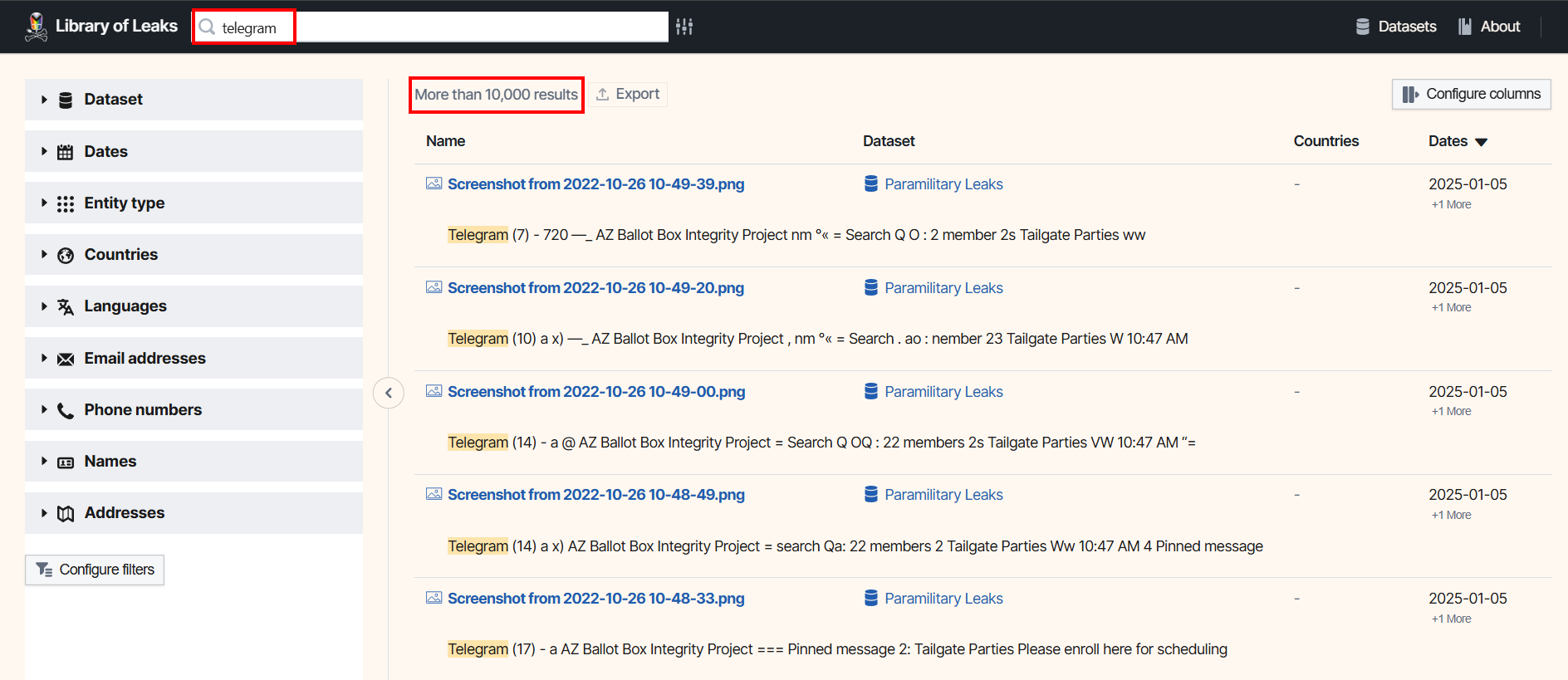
Figure 9 - Searching for the Telegram keyword on "Library of Leaks" website
Inspecting Telegram User Profiles
While Telegram is designed with privacy in mind, a skilled investigator can extract meaningful intelligence from the few elements that user profiles do expose, especially after correlating it with external sources.
This section will walk you through each profile element, from the most stable and reliable identifiers to the more contextual and behavioral signals.
Telegram ID
Every Telegram account is assigned a unique numerical ID at the time of registration. Unlike a username or display name, the Telegram ID cannot be changed by the user. It remains constant even if the account's username, display name, or profile photo changes entirely. This makes it the most reliable long-term identifier for tracking a specific account across time.
The ID also carries contextual value. Accounts with an ID below 1,000,000,000 were registered relatively early in Telegram's history, which may be relevant when assessing whether an account is a long-standing presence on the platform or was recently created.
Because some data breaches include Telegram IDs alongside phone numbers and email addresses, having the ID of a target account can allow an investigator to identify them even if they have subsequently changed their username.
It is worth noting that Telegram ID is not available through the Telegram App; however, there are several methods to retrieve it, such as by using the Telegram bot @userinfobot (see Figure 10). Forward a message from the target account to this bot, or share the target's profile with it, and it will return the account's numerical ID along with other basic profile information.
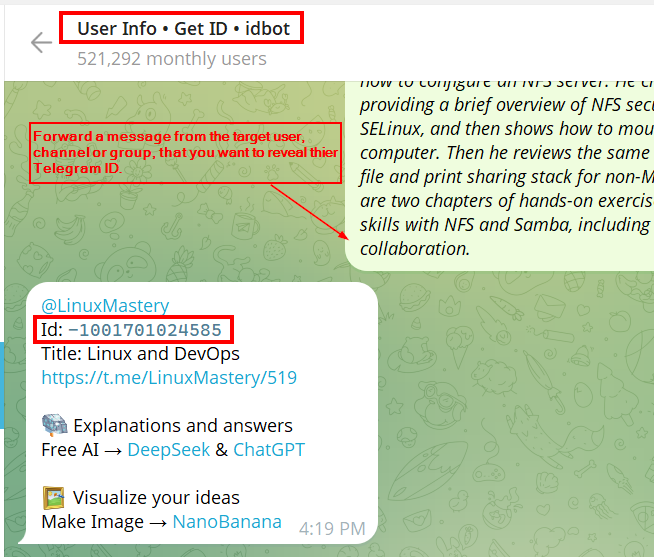 Figure 10 - Reveal a Telegram user, channel or group ID
by using @userinfobot Telegram bot
Telegram Username
A Telegram username is a unique, user-chosen identifier. It allows other users to contact you without knowing your mobile phone number. Usernames begin with the @ symbol (e.g., @darknessgate) and can be changed by the user when they want or even removed entirely (see Figure 11).
Usernames can be changed or removed at any time, which means they are less stable than the Telegram ID as a long-term identifier, but they remain highly useful for cross-platform investigation.
Many people use the same username consistently across multiple platforms. The same handle appearing on Telegram, Reddit, X, and dark web forums is a common pattern that can help with identification. The following tools support reverse username searches across platforms:
It is preferable to use more than one tool to search for a username. This website provides different links for conducting a reverse username search.
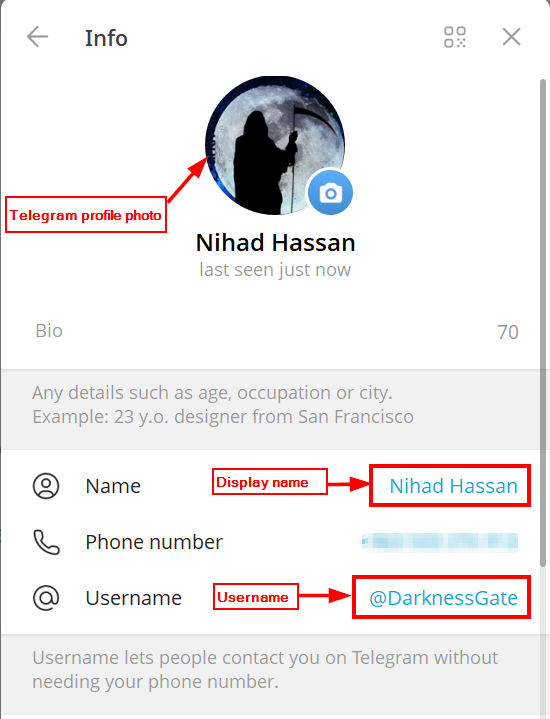 Figure 11 - Telegram user profile window showing
username, display name and profile photo
Telegram Display Name
The display name in Telegram is a human-readable label that typically consists of the user's first and last names. The display name is not unique across the Telegram ecosystem, as many accounts can share the same display name. It can also be changed at any time without restriction.
Despite being non-unique, the display name may open new leads for OSINT investigators. For example, many users choose their real first and last names, while others may select display names that have particular meanings in their language or culture. Understanding the meaning or origin of a name may therefore help investigators generate new investigative leads or identify possible geographic or cultural associations:
Even when you feel the display name is a pseudonym, it should be inspected as if it belonged to a real person. For any display name encountered, the following workflow applies:
1. Use Google dorks to search for instances of the name in documents, databases, and public web content. Useful queries include:
-
"John Doe" (filetype:doc OR filetype:docx OR filetype:pdf) — searches for the name in common document formats
-
intitle:"index of" "John Doe" — looks for open web directories that may contain files referencing the name
-
"John Doe" filetype:txt "password" — searches for publicly exposed text files that pair the name with sensitive data
2. Search for the display name across major social media platforms, using each platform's native search.
3. Check breached database services such as Have I Been Pwned to determine whether the name appears in any known data breach, which may reveal other online services the person uses. A list of data leak websites and breached databases can be found here.
4. Search dark web forums and hacking boards for the display name.
5. If the display name contains characters from a non-Latin script — Arabic, Cyrillic, Farsi — this provides an initial indicator of the account holder's likely linguistic background and possibly their nationality.
Profile Photo
A profile photo, when present, is one of the richest potential sources of information on a Telegram profile. The investigative workflow for a profile photo has three components: visual inspection, reverse image search, and metadata extraction.
1. Visual inspection: Look for background landmarks that suggest a geographic location, visible text such as phone numbers, email addresses, or organizational logos, distinctive objects like recognizable buildings or signage, and recurring individuals.
2. Reverse image search: Conduct a reverse image search to see where else this image appears online. Here are some reverse image search engines:
b. Yandex images (very useful for searching people from Russia and Eastern Europe)
c. TinEye
3. Metadata extraction is worth attempting even though Telegram strips metadata from most uploaded images. The profile image can be downloaded by clicking on it, and then when the large version appears, right-click on it and select "Save As…". After downloading the image, inspect its metadata. When an image has been shared as a file rather than as a standard photo upload, metadata may survive intact. Here are some tools to inspect image metadata:
- ExifTool by Phil Harvey
- Metadata2go (online tool)
- Forensically (contains different image analysis tools, including image magnifier and noise analysis)
It is worth noting that Telegram keeps a record of previous photos of a Telegram account (if the user did not deactivate this feature in the settings). To access the target Telegram account's previous account photos, follow these steps: (see Figure 12)
- Open the target user profile by tapping their name in a chat.
- Tap on their current profile photo to open it in full-screen.
- Swipe left or right to browse through older profile pictures that the user has not deleted.
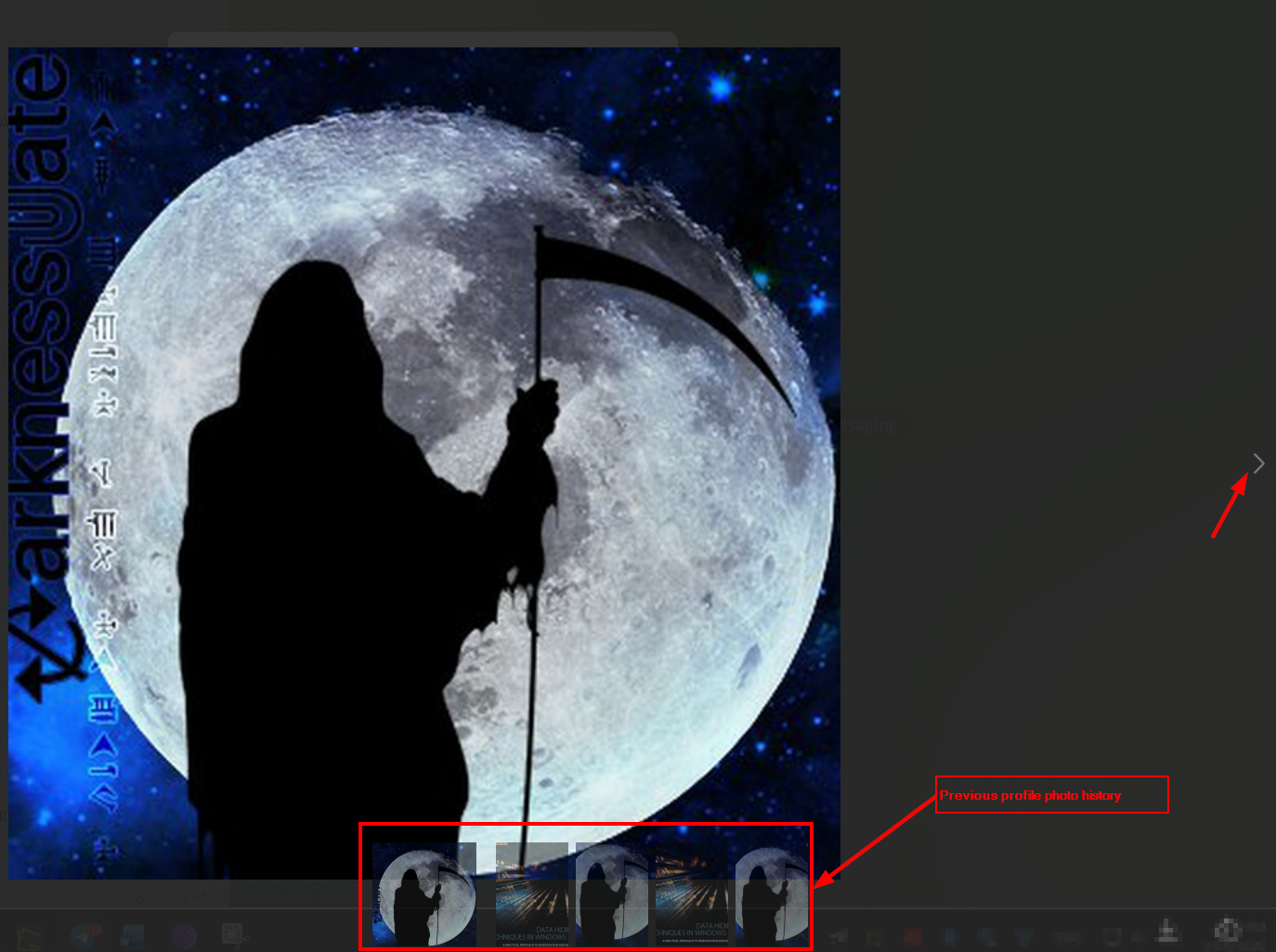 Figure 12 - Display the previous profile photo history of a Telegram account
Telegram Bio & Profile Description
Telegram allows users to add a short bio visible on their profile page. While security-conscious people leave this blank, it is common for users to include important information in this section, such as links to other social media accounts, personal websites or blogs, contact details (email or phone number), service descriptions, ideological statements, geographic information, or other personal identifiers.
For any email addresses found:
- Check data breach websites to see if it was included in a previous data breach. This gives info on other online services the target is using.
- Use Google dorks to discover any instances of this email address online, as it can provide new leads for investigation. Here are three dorks to start your search:
- "example@email.com" filetype:pdf OR filetype:doc OR filetype:docx — searches for specific email contained in PDF or MS Word files.
- intext:example@email.com — find the email address contained specifically within the body text of a page.
- intitle:"index of" example@email.com — looks for open server directories that might host a file containing the target email.
For any personal website or blog found in the bio, conduct the following inspections:
- Check the domain name WHOIS records.
- Check subdomains related to the main one.
- Check the hosting provider of the website.
- Visit the website and browse it for any email addresses, mailing addresses, or any information that can help in identifying the person behind the Telegram account.
Online Status and Activity Patterns
Telegram allows seeing the online status of users — if they allow it in their privacy settings. The possible statuses are:
- Last seen recently: Points to any activity from 1 second to 2–3 days ago.
- Last seen within a week: Indicates the person was online between 2–3 and 7 days ago.
- Last seen within a month: Shows activity between 6–7 days and 30 days ago.
- Last seen a long time ago: Indicates more than one month of inactivity. This status is also permanently shown if a user has blocked you on Telegram.
Although status may not look important at first sight, monitoring it over time can yield important information about the user. For example, by recording when a user was online across multiple observation periods, OSINT investigators can build a behavioral profile revealing the account holder's likely time zone (which country they are located in), working hours, sleep patterns, and preferred activity time.
The status information becomes more important when combining it with other sources. For example, when monitoring two Telegram accounts, if they both went online at the same time, this gives a strong indicator that both accounts are operated by the same entity.
It is worth noting that even if the target user has set their privacy level to prevent viewing when they are online, monitoring their activities on shared groups can reveal their online presence (the green dot means they are online), as Telegram will not hide their status in this case.
Inspecting Telegram Channels
Telegram channels are among the most useful entities for OSINT gatherers, as they contain valuable information, including member lists, forwarded and pinned messages, in addition to administrators' information. Content posted on Telegram can reveal channel members' interests, affiliations, and activities.
Channel metadata
Channel metadata is all descriptive information that exists aside from its main contents, including (see Figure 13):
- Channel name
- Username (the t.me/handle)
- Description
- Subscriber count
- Channel photo
The channel description plays the same role as a user bio, it contains descriptive information about the channel's purpose or objectives. In addition to this, it may include other important information, such as links to other Telegram channels/groups, links to external websites, cryptocurrency addresses, email addresses, and links to associated social media accounts on other platforms. The channel bio should be inspected as we did with the user bio previously.
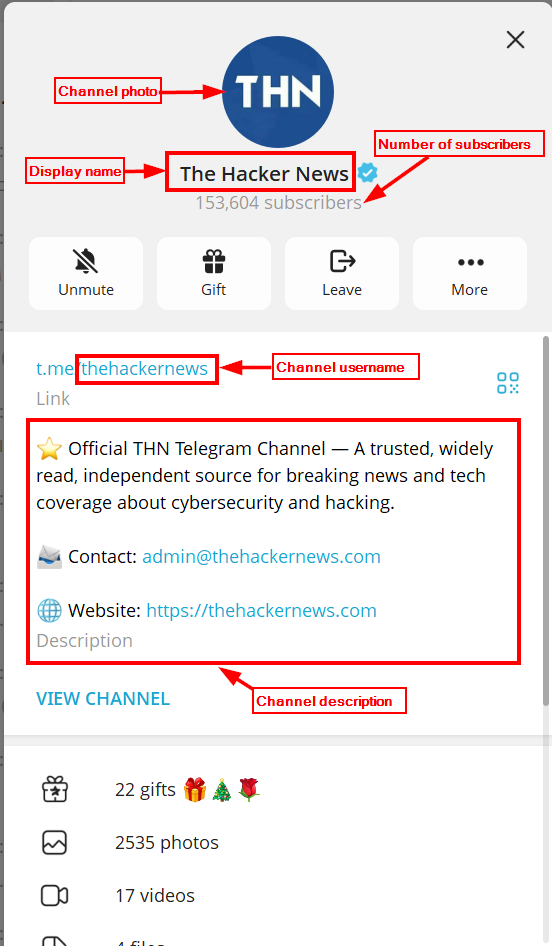 Figure 13 - A sample Telegram channel information page
The subscriber count provides a rough measure of a channel's reach within the Telegram ecosystem. A high subscriber count indicates broad influence; a sudden drop may indicate that Telegram has taken moderation action or that the channel operator has migrated followers to a new space. Neither the current count nor its trajectory should be ignored.
If the channel has a group linked to it, a button called "Discussion" will appear in the channel information page. Inspecting the linked group should be conducted carefully, independently from the channel's main contents, as it can provide a rich source of intelligence from user interactions in group discussions.
It is worth noting that channel information, such as name and subscriber count, may change frequently; always make a copy of the channel's current metadata information with tools like WebPreserver or the Wayback Machine, to preserve a timestamped record.
There are third-party services that allow OSINT investigators to retrieve extended metadata information about a channel, like historical subscriber growth, average post reach, creation date/time, citation network (which other channels have linked to this one), and posting frequency trends (see Figure 14). Here are two services that provide such information:
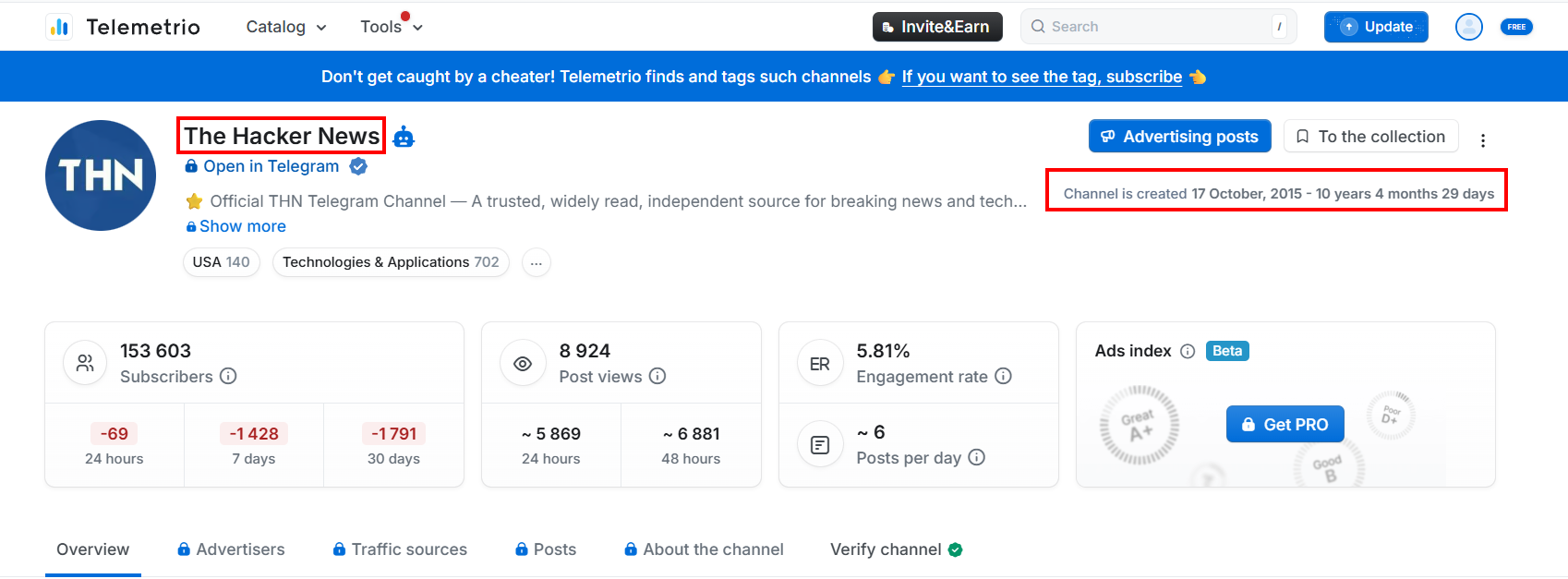 Figure 14 - Using Telemetrio services to retrieve extended metadata information about Telegram channels
Determining a Channel's Creation Date
Telegram does not display a channel's creation date within the interface, but it can be determined in two ways. The most direct method is to scroll to the very beginning of the channel's message history and find the first post — the timestamp on that post establishes the earliest known activity. Alternatively, Telemetr can surface creation dates for indexed channels without requiring manual scrolling.
Administrator and Owner Identification
Knowing who operates a Telegram channel is the most important piece of information that OSINT gatherers can try to get. However, Telegram conceals the owners of Telegram channels, and all channel messages appear to originate from the channel itself, not the person behind it.
Still, there are workaround methods that OSINT gatherers can follow to uncover the channel owner. If the channel has a Telegram group linked to it, inspect it to see if you can get the administrator's name of the group, as it is commonly listed publicly. On the other hand, group administrators commonly participate in group discussions using their Telegram user account, and this could reveal their identity.
If you have a profile of the target person from other sources, such as their Facebook, X or Reddit accounts, then you may be able to uncover the owner of a channel by inspecting their distinctive writing styles, recurring phrases, posting schedules, time zone-consistent activity patterns, and the types of content they post. All this information can contribute to a behavioral profile of the person behind the channel.
If the channel promotes external services, websites, or social media accounts, investigate those external entities for ownership information. For example, conducting a WHOIS search on associated domains, searching for registrant email addresses, and social media account ownership can bridge the gap between an anonymous Telegram channel and a real-world identity.
Content Analysis
Content posted on a Telegram channel should be inspected systematically, as manual inspection of channels may be daunting due to the large number of messages posted daily.
Begin with temporal patterns. Examining when the channel posts most actively — by time of day, day of week, and in relation to external events — can reveal the operator's likely time zone and working rhythm.
Gaps in posting activity are equally informative: an extended silence may indicate that the operator is under external pressure, has been arrested, or has migrated to a different platform. Examine if the gaps correspond to real-world events like weekends or religious holidays. A sudden surge in activity that coincides with a known real-world event — a military offensive, a major data breach, a political crisis — can confirm that the channel is directly connected to those events.
Linguistic analysis is another area that should be carefully analyzed. OSINT investigators should assess the language, dialect, vocabulary, and writing style present in the content. Look for regional idioms, transliteration patterns, or grammar structures consistent with a specific native language because they may provide geographic and demographic indicators.
Media and documents found across the channel should be inspected as well, as this content can sometimes comprise a significant portion of most channels. For example, images should be subjected to reverse image search and metadata extraction. Videos should be examined for geolocation indicators, visible text, capturing device identification, and timestamp verification. Documents shared like PDFs or MS Office files should be analyzed for embedded metadata, including author fields, creation software, revision history, and tracked changes.
Inspecting Telegram Groups
While channels are broadcast tools that allow sending one message to a large audience, a Telegram group can hold up to 200000 members and is considered an interactive community that allows members to communicate with each other and the whole group. These interactions between members make Telegram groups a rich source of intelligence, as conversations reveal relationships, behavioral patterns, internal disputes, and operational details that channel posts rarely expose.
Group Size and Member Lists
Group size is the first thing to take note of. We can get the group member count from the group profile page (see Figure 15); however, keep in mind that a large number of users does not necessarily mean a big group, as there could be a large number of inactive accounts, bots, and fake accounts.
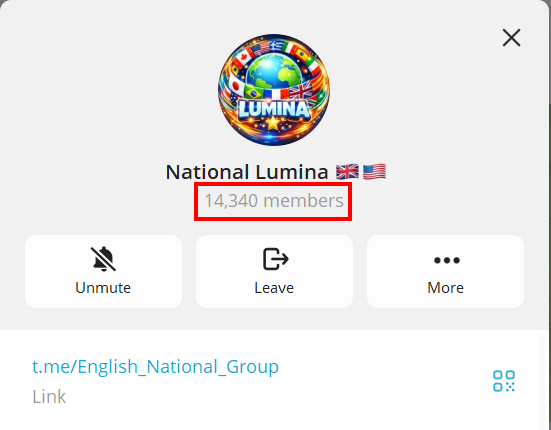 Figure 15 - Viewing a Telegram group's number of subscribers
Another important piece of information, regardless of group size, is the group member list. We can access it (if it is set to be public) by tapping the group name and scrolling through participants.
For each member, the list exposes their display name and profile photo (see Figure 16).
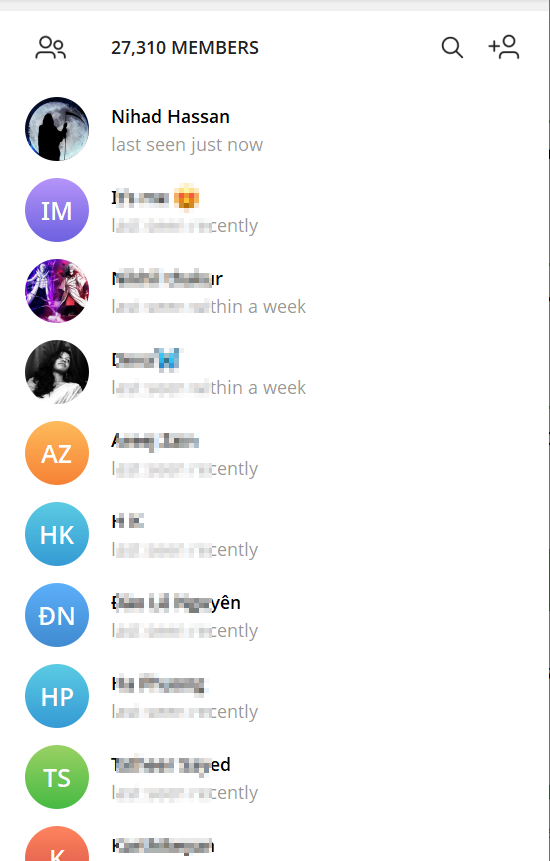 Figure 16 - Viewing a Telegram public group member list
Inspect the Group Name and Photo
The group name points to its main function, objectives, points to the intended audience and the operator's likely linguistic background.
If the group name was changed over time, this can point to important events or efforts to rebrand under another name. Use the TGStat service to view past records of a target Telegram group’s historical name changes. (Remember, this only works with indexed groups.)
The group photo should be examined using reverse image search to see where it appears online. If the image contains text within it, then we can use a magnifier service (e.g., magnific) to read small text letters.
Group Creation Date
Use the same techniques to inspect when a Telegram group was created, as when a channel was created:
- Go to the first message posted in the group
- Use a third-party service to see when a Telegram group was first created, such as Tgstat (see Figure 17)
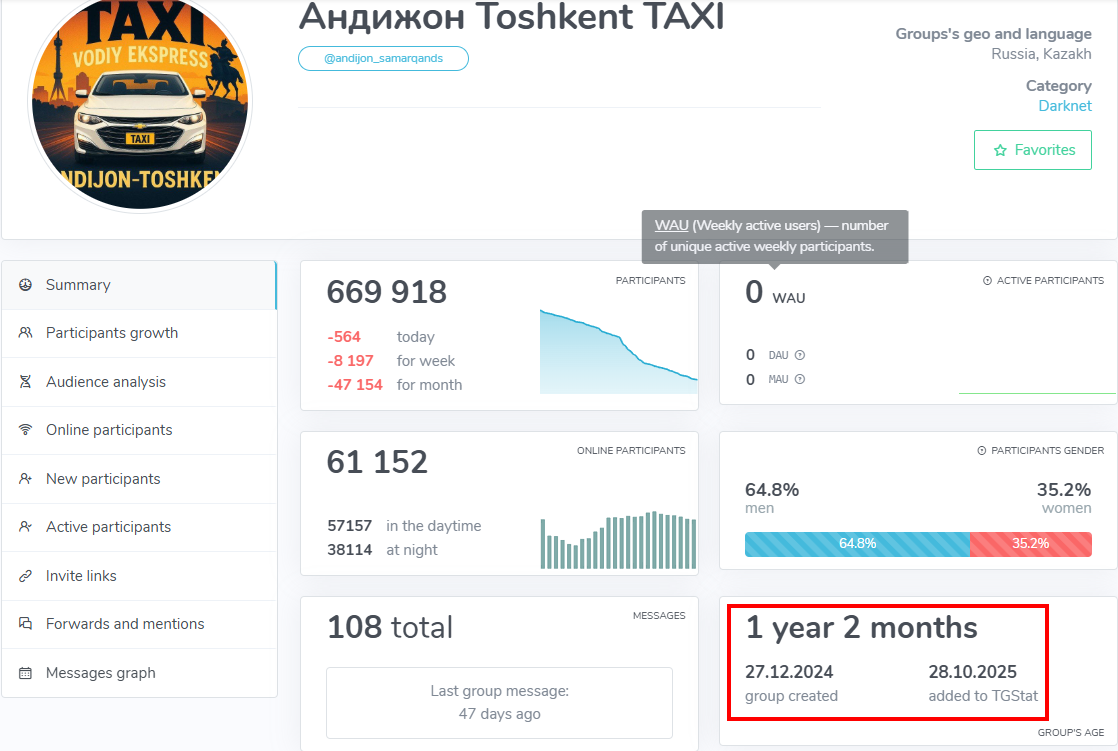 Figure 17 - Use Tgstat to view when a Telegram group was first created
Search Group Contents
Unlike Telegram channels that contain unidirectional messages, groups contain different types of content posted by users in addition to a large number of text messages that require using specific search strategies.
The best method to search within the group is to use the Telegram group's built-in search functionality. We can access it by tapping the magnifying glass icon within the group (see Figure 18).
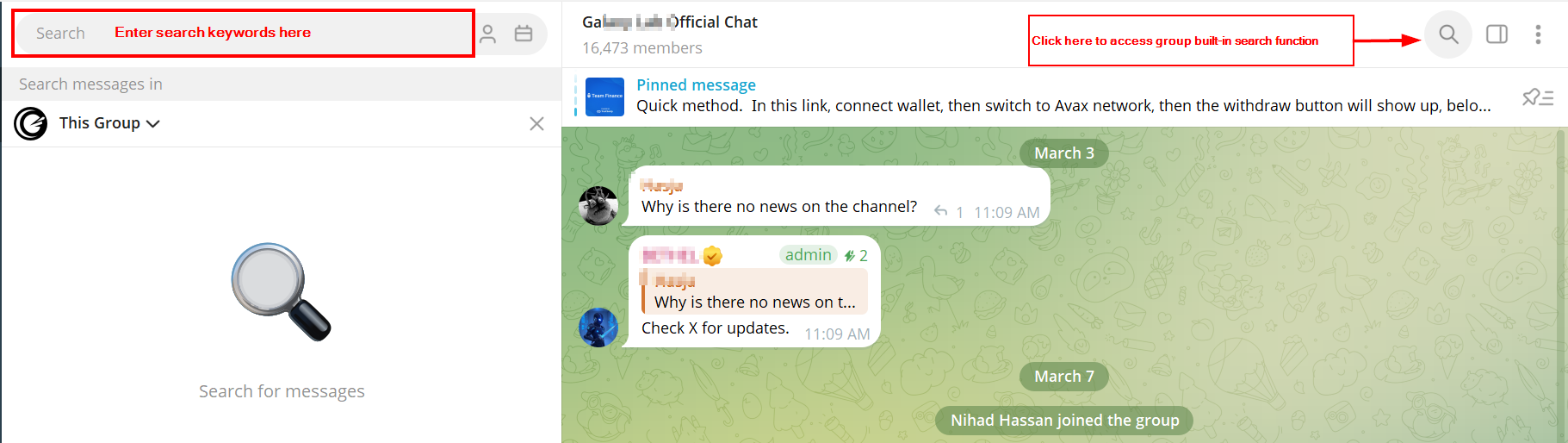 Figure 18 -Access group built-in search function
Effective in-chat search requires a keyword strategy, such as using usernames, handles, or real names of individuals under investigation, in addition to searching for technical indicators such as IP addresses, domain names, cryptocurrency wallet addresses, or malware names.
Inspect Group Multimedia Files
A lot of content shared on Telegram groups is multimedia files like photos, videos, documents and links. Telegram makes browsing this content very efficient as it organizes them according to their type. For instance, to view multimedia files shared on a specific group, tap the group name, then open the group profile information page, and you will find all media files shared across this group organized into categories along with the number of files (see Figure 19).
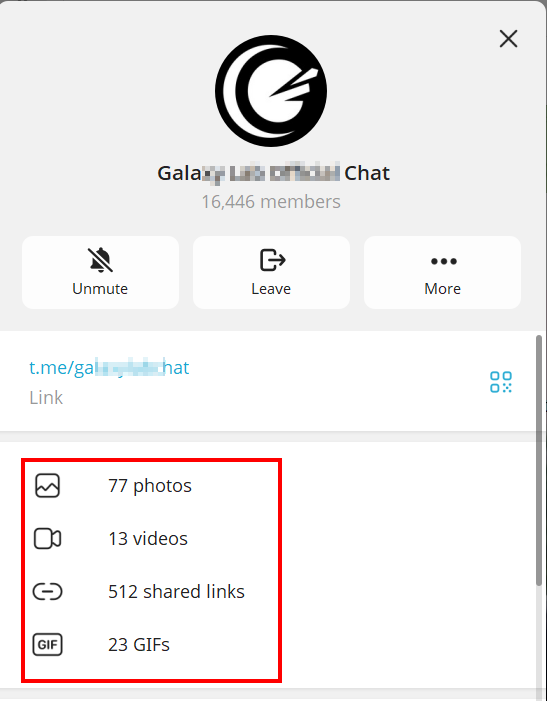 Figure 19 - Viewing multimedia files shared on a group
Download the photos first, then follow the workflow suggested earlier for inspecting photos: Reverse image search, metadata extraction and visual inspection.
Videos, on the other hand, require frame-level analysis, so we can extract interesting pictures from them and conduct a reverse image search. We can also execute video reverse search using any of the following services:
- InVID-WeVerify – In addition to extracting keyframes from videos and performing reverse image searches automatically, this plug-in allows OSINT investigators to verify content on social networks.
- Bing Visual Search – While it is not a video search engine, the extracted frames from subject videos can be searched using this search engine.
To extract video metadata, use a tool like MediaInfo or an online service Video Metadata Viewer.
Documents shared as PDFs or Office files require another workflow; we need to check their metadata information, as it may reveal important information like author fields, organization names, software used to create the document, revision history, and GPS data. If the document contains macros, then this should be inspected in an isolated sandbox environment, such as Any.Run or Hybrid Analysis before opening.
Links provide leads to external resources, such as websites, other platforms, services, and tools that expand the investigation's scope. Links to personal blogs or websites should be inspected thoroughly using WHOIS databases, finding the hosting provider, in addition to using the Wayback Machine to view past versions of the website. If you feel a link is suspicious, then scan it first using services like VirusTotal or URLScan before any direct interaction.
Inspect Group Text Content
Text content is considered the primary intelligence source available in Telegram groups as it reveals relationships, intentions, operational details, and identity information. For instance, conversation thread analysis shows who responds to whom, which accounts consistently interact, and which individuals occupy central communicative roles within the group.
When there are repeated interactions between specific users, this could reveal real-world relationships or social affiliations. When we want to visualize the relations between a large member group, we can use computerized tools such as Maltego.
We should also use a sentiment analysis tool to track shifts in group tone over time. Here are some tools for performing sentiment analysis on text:
- Formula Bot Sentiment Analysis
- Daniel Soper's Sentiment Analyzer
- VADER Sentiment Analysis – A Python library that is specifically attuned to sentiments expressed in social media, and works well on texts from other domains.
Defensible Evidence Collection from Telegram
Telegram is a great source for collecting digital evidence to support various investigation needs.
However, because Telegram evidence can disappear, OSINT investigators should follow specific procedures when collecting evidence to ensure the defensibility of their findings:
- Capture screenshots of relevant posts and comments, including timestamps and metadata, before they get deleted by the target user/s.
- NOTE: Screenshots may not be defensible in court unless they include proper metadata, context, hyperlinks and can be authenticated as genuine and unaltered. To capture this data in an authenticated format, consider using a web evidence capture tool like WebPreserver.
- Document the search process including the keywords used and the date/time when the evidence was captured to establish a transparent chain of custody.
WebPreserver for Telegram Investigations
WebPreserver is a social media and web capture tool that allows you to capture Telegram posts, comment threads, or entire group or channel contents in just a couple of clicks. The browser plug-in automatically expands threads and comments, and autoscrolls timelines, saving you time from manually expanding and capturing every post. Better yet – all evidence collected is complete with the appropriate metadata, digital signatures for authentication, and can be exported in native formatting, so you can present your evidence in context.
Learn more about WebPreserver here.
Telegram OSINT: Final Thoughts
Telegram represents both a significant intelligence opportunity and a difficult investigative challenge for OSINT analysts. Its combination of public channels, interactive groups, and bot infrastructure creates a rich ecosystem of accessible data, from real-time crisis intelligence to cybercriminal coordination.
However, effective Telegram OSINT requires more than platform familiarity; it demands a structured methodology, a diverse toolset, and a clear understanding of the platform's privacy architecture. By combining native search techniques with third-party indexing services, cross-platform correlation, and systematic content analysis, investigators can extract actionable intelligence while maintaining operational integrity.
Don't forget to check out our OSINT Investigation Library: