


Long before “OSINT” became a widely recognized term, Cynthia Navarro was already doing the work.
A licensed California private investigator with over 40 years of experience, Ms. Navarro has spent her career conducting business intelligence, cyber, and intellectual property investigations while training thousands of investigators worldwide.
As the principal of Finnegan’s Way, President Emerita of OSMOSIS, and former President of the High Technology Crime Investigation Association, and co-host of OSINT Cocktail, Ms. Navarro has played an influential role in shaping a growing global OSINT community.
In this interview, Ms. Navarro shares valuable insight from her decades in the field, including:
- Why ethics are the foundation of any OSINT investigation
- The importance of community in your career
- The opportunities and risks of AI
- Foundational skills investigators should develop early
Read the interview or watch the video below to hear Ms.Navarro’s perspective on how OSINT has evolved and where it may be heading next.
Editor’s Note: This transcript has been edited for length and clarity.
Kyla Sims: On the topic of your co-hosts for OSINT Cocktail, how did you all meet each other?
Cynthia Navarro: We met through conferences and networking. We’re all very social. I met Kirby at the Osmosis Con conference. I’d been attending her conferences for years and always had a wonderful time. The four of us mainly connected through conferences over time.
Kyla Sims: That’s great. It’s funny—once you get into it, you realize there are so many conferences and organizations. There’s this ecosystem of organizations, certifications, and schools. It can be intimidating. How does this all fit together?
Cynthia Navarro: There’s definitely a lot going on. Everyone has their specialties. When you bring in OSINT, you’re bringing together different cultures, countries, and laws. The collection process and purpose are usually the same, but you have to understand your local laws and your ethics first and foremost.
There really aren’t boundaries online. It’s wide open for everyone, so it’s easy to pull a lot of people together.
I was just chatting with someone from the Netherlands, and then spoke with someone from India this week, and someone else from another country. I talk to so many people, it’s hard to keep track. It’s one big community. That’s the best way to describe it.
“There really aren’t boundaries online.
It’s wide open for everyone, so it’s easy to pull a lot of people together.”
Kyla Sims: I never thought about it that way, but it makes sense. There are no borders online.
Cynthia Navarro: Exactly. There are also so many tools available. If you don’t know a language, you can ask someone for help. I’ve done that. Sometimes I need information and don’t even know what the text says.
There’s a gentleman named Skip Sorenson who teaches how to work across languages. He knows seven or eight languages and trains people on conducting OSINT in different languages. He’s amazing. He’s across the world somewhere beautiful, and he’s just a text away.
That makes a huge difference.
Kyla Sims: So, before we get deeper into it, I’m going to run through what I gathered from your bio, and you can correct me. First, You’ve been a licensed private investigator in California for over 40 years.
Cynthia Navarro: Correct.
Kyla Sims: You’re currently the president of Osmosis, an association for open-source intelligence professionals.
Cynthia Navarro: Not exactly. Ritu Gill from Canada is the current president. I served the first two years and now support from the background. Cynthia Heatherington is the founder. We all work together, and I’ll always be part of Osmosis.
Kyla Sims: That’s great.
Cynthia Navarro: I’m President Emeritus. It’s like a lifetime title. They can’t get rid of me.
Kyla Sims: I also saw that you’ve consulted on civil and criminal investigations worldwide, specializing in anti-piracy, intellectual property, OSINT, and business intelligence. You’ve held positions at several Silicon Valley companies, managed business intelligence and IP theft investigations, conducted interviews and cyber investigations, and trained thousands of investigators worldwide.
Cynthia Navarro: Yes. It’s been a lot of fun. My career keeps growing.
Before OSINT was formally recognized, I was already doing it. Investigating company connections, identifying executives, tracking relationships—that’s open-source intelligence. It was just more paperwork and courthouse visits back then instead of online searches.
Now it’s much easier. So much easier.
“Before OSINT was formally recognized, I was already doing it.”
Kyla Sims: What drew you to become a private investigator and eventually get into OSINT?
Cynthia Navarro: Originally, I wanted to go to law school. While finishing my degree, I saw a posting for investigators at an organization. I thought I could work part-time and still apply to law school.
I ended up staying with the person who hired me for nine years across three companies, including Pinkerton. I loved the challenge. It was a worldwide company. At one point, I was the only female manager out of 90 offices globally. That was a challenge I was proud to take on.
Kyla Sims: No pressure!
Cynthia Navarro: So that was how I got into it, and then I just kind of stayed.
I also joined the High Technology Crime Investigation Association when they first opened membership to the private sector. Originally, it was just law enforcement and district attorneys. That’s how I met Cynthia Heatherington. She taught classes for us, and we became friends. I just kept learning and growing.
Kyla Sims: What did the field look like when you first started, and how has it changed?
Cynthia Navarro: In the 90s, while working for Adobe, I found a company selling a product they shouldn’t have been selling. So I got a hold of the person that was in charge of their investigations at the time and we did a big case on it. It was like wow, this is fun — all this information we could get. That turned into a big case involving undercover buyers and police. It was exciting to see what could be done online.
I’m not very technical, but I like finding things. I learned how to use tools to make investigations easier. OSINT as a term didn’t exist yet. It was just “you can find this online.”
And again, it’s a community, so we’re all sharing information. It’s not the secret sauce that nobody is going to tell you about because they do want you to know. They want you to expand your knowledge and make sure you’re doing it correctly, because it could be done illegally.
OSINT can be bad OSINT if you have the wrong people with no ethics, not doing the right things. It’s just like anything — you have your law enforcement and you have your criminals. They are on two different sides, but they can get their information the same way. So it’s how you go about using it.
Ethics in OSINT is probably one of the most important things.
"It’s just like anything — you have your law enforcement and you have your criminals. They are on two different sides, but they can get their information the same way."
Kyla Sims: Was there a pivotal case that shaped your approach?
Cynthia Navarro: Yes. I worked on an international case involving businesses in China. Everything had to be found online. I organized all the information into a single-page workflow diagram so my client could understand the connections. He loved it and never asked for a traditional report again.
That pushed me to refine how I present information and continue training.
And then social media soon popped on. Boy, that was fun, We had a lot of fun doing that. Trying to track people, going online, trying to get in, to be friends with them. But then we had to consider, well, wait a minute — is this legal what we’re doing?
So then you start looking at the legality side of it. And that’s when law enforcement was just starting to put their toe in the water and getting online to collect information. Then restrictions started hitting them.
Questions of legality and admissibility became critical. How do you prove you didn’t manipulate what you captured or you weren’t just making it up? That changed everything, looking at the legal aspect of it.
And this is on the private side, we’re not even talking about military intelligence, that’s a whole other side.
Kyla Sims: And that’s really grown as well online!
Jesse, our Director of Customer Success, is very plugged into the OSINT world. There’s an article he always refers to that calls the war in Ukraine, The First TikTok War.
You can get so much information — where troops are, what’s happening. We’ve never had this kind of access to information on the ground, unfiltered. It’s not just preventing insurance fraud or proving theft online, it’s huge international matters being broadcast for the world.
Cynthia Navarro: Yes. Journalists are out there using OSINT too. Groups like Bellingcat and ProPublica use open-source intelligence extensively. They share methods and collaborate. Again, it’s community-driven.
They’re great and we’re all doing the same work, it's just where we go from there, what we specialize in.
But misinformation and disinformation add another layer. That’s a whole other world you have to be cognizant of.
Kyla Sims: I’ve heard that tech in OSINT can also be kind of a rabbit hole. You have lots of open source tech, there’s vendors popping up and disappearing. But you’ve been on the scene since the very beginning essentially — before there was even an internet to be looking on, and other eras where online tools and learning how to collect online information was a big hurdle.
Has witnessing the rise and fall and evolution of these technologies over the years influenced your approach to adopting technology in your work?
Cynthia Navarro: You have to go with the flow. Vendors come and go. I recently looked at photos from old Osmosis conferences and realized how many vendors disappeared.
You talk to other practitioners. Ask questions. Understand what works. Technology constantly changes, and that’s okay. It’s consistent in the sense that learning new technologies is something you will always have to do.
Kyla Sims: Even the platforms online are constantly evolving and changing. I think about Facebook when it first launched vs now. It’s a completely different thing. So technology has to keep up as well.
Some OSINT folks I’ve talked to say you can’t really rely on open source tools or certain vendors because one day someone may abandon it, not update anymore, or the vendor just disappears and you’re left in the lurch. How do you handle tools disappearing or becoming outdated?
Cynthia Navarro: Community helps. If a tool disappears, I ask others what they’re using. That really makes a difference. It’s when you’re not as involved in the community, that may slow you down.
Social media platforms constantly evolve. You have to monitor where people are migrating and what platforms are popular in different countries. Facebook, for example, has had global reach for years.
It’s an ever-changing occupation.
"When you’re not as involved in the community, that may slow you down."
Kyla Sims: Speaking of ever-changing technology and staying ahead of the curve — you can't talk about the internet without talking about AI. So I want to know how you see it coming into play in OSINT. There’s so many directions it could go.
Cynthia Navarro: There’s some positive things and negative things, like anything else.
One of the things we have to always have to take care of when we’re collecting information, is that we don’t just get it from one place. You need different sources, no matter what you’re doing. Both for verification and for understanding.
AI is another tool. It depends on how well you integrate it. There’s always something new. If you learn how to prompt properly, it can help organize thoughts and surface new angles. Different AI tools have different specialties. Some can even generate investigative reports.
AI isn’t going away. I can tell you, I post a lot of jobs — job postings are now looking for people to train AI systems properly. The question is whether you want to be part of that.
But you must be careful. If you input private data, it may not stay private. Garbage in, garbage out
So a lot of pros and cons — it’s a work in progress.
Kyla Sims: With AI-generated content everywhere, are you encountering it in your work? Is it causing issues or are there other considerations you have to make now when you’re looking at content online and assessing authenticity?
Cynthia Navarro: There absolutely is a problem with it because you don't know where things originate from.
Did someone take something and change it to something else? Is that something the original one?
What tools can you use to verify whether this is true or not? You have to come up with at least two or three different sources that are going to verify, yes, this is it. It’s hard.
There are websites where people ask: is this AI? Sometimes I have done well [identifying AI-generated content], others, I have failed miserably. I’m like, oh my god this is getting difficult for me! Am I too old now?
No, I’m not. Let me get my grandkids in here to help me. They’ll tell me. So, you can’t know everything and you won’t be great at everything.
Kyla Sims: Speaking of knowing everything and trying to keep up, you've trained investigators all over the world. I'm curious, how do you adapt your OSINT methodology when dealing with different legal jurisdictions and cultural contexts?
Because I know we said, “there are no borders on the internet,” but where you're looking at the internet does have borders
Cynthia Navarro: I always remind investigators that they must understand their local laws. It's your responsibility. I can’t take responsibility for it because there are too many to even consider.
Even in the US, each town, city, county, you have to look at see what the restrictions are:
Do I have to be a licensed investigator to do OSINT work here?
In some places, you must be licensed to conduct certain work. I’ve had city and county attorneys hire me specifically because I’m licensed in California.
You must do your due diligence. Interview the investigator you hire. Not everyone does. And you learn the hard way.
Kyla Sims: Have you noticed a shift in how newer investigators think compared to those you've worked with who've come up with you 20, 40 years ago?
Cynthia Navarro: I think it’s our analytical view of things. How we look at things changes. We have to pay more attention.
I think looking at things analytically can maybe be more of a challenge for less experienced investigators doing the work. With experience, you’ve already found all the pitfalls.
So someone new coming in, they might have more of a challenge understanding different data sources and what kind of information they give out. They may get an address and say, this is where they’re living at — but you have to go a little bit deeper than that. That address could be from five or six years ago. But that’s something you learn with experience.
And not being able to ask for help, they think it’s a failure on their part and it’s not. I ask questions all the time. It doesn’t matter. You have to.
Kyla Sims: What should new investigators master first?
Cynthia Navarro: The number one thing they have to understand is the foundation of OSINT and all the ethics and legality. Just because information is available online doesn’t mean it should be used. If you want to give that information to someone else, how are you going to verify it?
Ethics is probably the biggest thing. Understand foundations of analyzing information, ie. is this what was asked for? Do I understand what I am looking for? I would say that they need to stop and think about those things.
"Just because information is available online doesn’t mean it should be used."
Kyla Sims: What mistakes do you see often? And what are the costs?
Cynthia Navarro: The cost is your reputation, number one. If you’re making a lot of mistakes, that’s on your reputation, and that’s what gets out there. It could be misidentifying something or an individual or company, a failure to verify the information because you’re in a rush or on a timeline.
They need to stop, take a breath, look at it, and need to verify it. So slowing yourself down instead of trying to be the first one to come up with the answer.
Timeline awareness is another problem where they can go down a rabbit hole. They really need to identify and understand what it is they're looking for. How much time can go into this? Because companies do not want to pay for you to find this information within 10 hours when they want to pay you for two hours.
This can also mean an over-reliance on tools. Tools are not always the best to rely on because they don’t replace your critical thinking.
And of course evidence preservation. I will say, I have been quickly going through something and then have wanted to go back, maybe a couple days later, and it's no longer there and I should have captured that information right at that time.
And as you're capturing it, what is it providing you? Are you getting the metadata? What are you getting to preserve that information so you can show that you were actually there and there's no dispute about how it was collected? Especially if you're taking it into court.
Kyla Sims: I wanted to go back to something you said about evidence preservation and being aware of timelines. I was talking to our Director of Customer Success and he was saying one of the things that we see a lot with people using WebPreserver is they have the ability to capture things like right in the moment. They see it, they can capture it. It's got all the metadata. It's great. We love it.
But then they get really ambitious and they're like, "Wow, I can capture this entire site. Well, let's capture the entire site." So, they start capturing and now they have 60,000 records that they have to go through. So he says: “Just because you can, doesn’t mean you should.”
Cynthia Navarro: Yeah. No, that’s absolutely correct.
You can overwhelm not only yourself but the client.
Sometimes you want that whole website. That would be good if you were doing like an IP case and you wanted to show historical stuff and you can say on this date this is what they had.
But when you're doing more general investigations and OSINT work, you want to stick with what it is that you're looking for. If there's a reason you want to go off script, then you want to go back and verify that with your client and say, "Look, I came across this website. This is why I think it's important. I want to get more."
Otherwise, stay away from that.
Kyla Sims: That's so fair.
Now, you actually have a pretty visible online footprint, and from talking to newer investigators, I know that some struggle with balancing building their career online and still remaining anonymous enough that it doesn't compromise their investigations.
How have you balanced that and what advice do you have for new investigators struggling with that balance?
Cynthia Navarro: Well, I'm old and I don't care, so that’s easy for me!
No, when you first go in, you do want to be careful. You don't want your information out there. I mean, even the littlest of information can really give a lot.
It is a challenge. You want to ensure that you keep your privacy as much as possible.
Do you have a babysitter that's going to be putting information out about you or a neighbor? Your information can go out so many other different ways that there is really no privacy. Something can get out somehow, someway.
Your kids inadvertently do something because they want to be social online and they're doing their videos and putting out. Or oh, we're going here on vacation. We did this or I don't want to go here.
So, you have to consider: are your kids, your parents, your aunt, your uncle, someone you know, they're going to put something out at some point because they don't know. It’s very difficult. And it's a lot of work to cover your tracks.
At this point in my work, I'm okay but there is other work where you really have to be cognizant of that.
Kyla Sims: What’s the best advice you’ve received?
Cynthia Navarro: Your work represents you. What you’re putting out there is what people are going to know about you. So if you're giving bad information out there and not good work that's going to come back on you and your reputation.
Your reputation is important. Your ethics are very important.
And you can’t do everything. Some things you will not be able to do, and that’s okay. You can’t be perfect in everything, but you have to be honest and explain. If you can’t obtain something, say so.
I’ve rarely applied for jobs. Most came through reputation and my previous work. I think that makes a big difference.
Kyla Sims: What keeps you passionate about your work today?
Cynthia Navarro: The relationships that I have with people all over the world. I love to get out and network with people and help. Right now, my passion is helping people get jobs, looking at resumes.
It's just going out there and helping them. I do so many cases lately just for free because it's like, let me just look into this and do this for you, you know?
And I’m having fun doing that, and communicating and learning from everyone else. Like with our OSINT Cocktail Podcast, you know we have fun.
Kyla Sims: It’s funny, I never really thought about OSINT like that. I think when I first learned about it, I thought of some hacker with his hoodie up on the dark web and finding out info, but really it’s like this beautiful community who are all helping and supporting each other to do OSINT for good.
Cynthia Navarro: Absolutely. I forgot to mention Kelly Paxton — she does financial fraud stuff. Oh my god, I love to listen to her and she reads tons of books.
It doesn't have to be all just work, work, work. You need to add personal things in. Kirby, Amber, Kelly and I, we have a blast chatting with each other. I also go on other folks' podcasts just because it's fun and I like them, and it's something different.
That’s really what makes it — getting out there and being part of the community.
Kyla Sims: My big takeaways from our conversation are: you can’t stop learning. You’ve got to learn, learn, learn and never stop.
Second, the ethics of what you’re doing is super, super important. There’s a lot of work that needs to go into things before you ever even get in front of that computer.
And that the community is a tremendous resource for folks in this line of work.
Cynthia, thank you so much for your time.
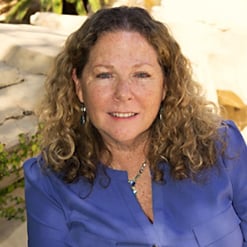 Cynthia Navarro
President Emerita at OSMOSIS Association
OSINT Analyst, Private Investigator, Trainer
Co-Host of OSINT Cocktail
Ms. Navarro is a licensed California Private Investigator and principal of Finnegan’s Way, an investigative consultation and training firm located in California. She has been in investigations for over 40 years. Most recently she is President Emerita, of OSMOSIS, an association for open source professionals who support the development of the OSINT tradecraft. Prior to Finnegan’s Way, Ms. Navarro held various management positions at several Silicon Valley companies.
Throughout her career, Ms. Navarro has been responsible for managing business intelligence gathering, intellectual property theft, interviews, cyber investigations, background investigations, and training. She has taught using the internet as an investigative tool (OSINT) to thousands of law enforcement and investigators worldwide.
Ms. Navarro was President of the High Technology Crime Investigation Association and held many positions for the Silicon Valley Chapter. She holds a B.S. in Criminal Justice from California State University – East Bay.
Learn more about OSMOSIS Association here: https://osmosisassociation.org/
Don't forget to follow and connect with Cynthia on LinkedIn.