

Amber Schroader has spent decades working at the intersection of digital forensics and investigative technology.
A self-taught technologist who entered the industry at 14, Schroader has spent over three decades at the forefront of digital investigations. As founder and CEO of Paraben Corporation, she has developed more than 20 forensic software programs, patented a wireless signal-blocking device, and built a globally recognized training and certification program for digital forensics practitioners.
Schroader is credited with pioneering the "360-degree approach" to digital forensics — a methodology that treats every stage of an investigation, from collection to courtroom, as a single unified process — as well as coining the concept of "Forensics of Everything" (FOE), a world where connected devices, autonomous systems, and IoT environments leave a comprehensive and traceable digital fingerprint.
In this interview, Schroader shares hard-won insight from a career spent chasing evidence across every technological shift of the modern era, including:
- How mobile devices went from afterthought to the centerpiece of digital investigations
- Why the "Forensics of Everything" will reshape how we think about digital evidence
- The role of AI in transforming investigative workflows — and why she's embracing it
Read the interview or watch the video below to hear Schroader's perspective on the most common mistakes investigators make and the future of digital forensics.
Editor's Note: This interview has been edited for length and clarity.
Kyla Sims: So, I did a little OSINT work myself, which was not very hard because there is a lot of stuff about you on the internet.
You are a longtime digital forensics expert and entrepreneur.
You're the founder and CEO of Paraben Corporation, a company focused on digital forensics tools and solutions for extracting and analyzing digital evidence from sources like mobile devices, computers, email systems, cloud storage, and IoT devices.
You've also developed over 20 forensic software programs.
You've patented a device for blocking wireless signals.
You've authored several books and articles and taught numerous courses and workshops for the digital forensics community worldwide.
You've also coined the concept of the ‘360 degree’ approach to digital forensics as well as started the momentum and push for the ‘Forensics of Everything’ or FOE
Which is incredibly impressive.
So thank you so much for joining me today. I have a lot of questions, so let’s jump in.
First, I want to talk a little bit about your background and how you ended up where you are today. So, what drew you to this profession?
Amber Schroader: I wanted to be Wonder Woman.
I absolutely wanted to be Wonder Woman. As a kid, when you're growing up and they ask, "What do you want to be when you grow up?" my answer after watching Lynda Carter was always, "I want to be Wonder Woman."
Every paper—if you look back at my elementary school work—it’s like, Wonder Woman, Wonder Woman, Wonder Woman.
As I got older, I realized what she really was—someone who was fighting for justice. And that’s what drew me into the investigative space.
I think I’ve always loved an underdog because I’ve always felt like an underdog. So I was like, this is what I want to be, and this is the closest I could be, because no one can actually be Wonder Woman. That’s a little tough.
So I had to find the next closest thing, which was fighting for justice through evidence.
That’s what brought me in. But I still live and die by wanting to be Wonder Woman.
“I wanted to be Wonder Woman.”
Kyla Sims: So can you take us through your career journey? How did you get where you are today?
Amber Schroader: I actually started because I got an opportunity when I was 14, which I know you probably didn’t expect.
Kyla Sims: That is young!
Amber Schroader: One of my advisors was starting a company, and they were looking for workers to do manual tasks. Back in the day, I was duplicating floppy disks because that was a thing for their software product.
I started part-time at 14 and stayed with that same company for 12 and a half years.
I worked every job—from production all the way up to VP at the top of my title scale—launching products, doing technology, doing investigative work.
They did a lot of password recovery work, so I worked on those projects. I am neurodivergent—I’m dyslexic and OCD. I’m functional, but don’t make me walk by crooked pictures. I have to fix them.
I worked my way through, and after that time period, they let me go. They felt I was not a good fit for their customer base because their customers preferred dealing with a male instead of a female.
So I started my own company and ramped it up to have my own digital investigative platform.
I love tech. I am such a nerd. If I could live in Star Trek, I would.
We might be heading there one day with AI.
I’m completely self-taught. Because of dyslexia, it takes me longer to learn things, but I never took a computer class. I just figured it out.
My family couldn’t afford a computer, so it was a lot of figuring it out on my own and building my own stuff out of parts because we just couldn't buy anything..
But 14 to now—that’s a lot of time.
Kyla Sims: That’s really impressive. So when did your company start?
Amber Schroader: I started the company in 1999 as a shareware company because that was a thing. I was making what we’d now call apps.
In 2001, I made a hard turn and turned it into a digital forensic technology company because that’s where my passion was.
I can’t be Wonder Woman making apps that help you write your resume. So I flipped it and have been pushing it ever since.
Technically, it’s about 27 years in business. That was a math moment, but yeah—it’s a long time.
Kyla Sims: Wow. And in that time, you’ve accomplished a lot. I’m surprised to hear that you don’t have formal training. You’ve built over 20 forensic software programs.
Amber Schroader: I’m really good at doing things backwards, which is what technology does in investigations.
Architecting and putting it together just clicks for my brain. I can design something quickly and have it fully spec’d out because I also work really fast.
That’s probably my superhero power—over-productivity.
I did do formal education in culinary school while I was already working in tech, just in case AI takes over. People will still have to eat.
“That’s probably my superhero power—over-productivity.”
Kyla Sims: They’ll still have to eat.
Amber Schroader: So I got a backup plan and planned it early.
Kyla Sims: Are you going to design the first replicator?
Amber Schroader: That would be very cool. I love experimenting with food.
I do a lot of baking because my grandparents were pastry chefs, so I grew up in a bakery.
Now I think about how to make things healthier—less chemical-heavy.
You come to my house, and you eat well. No one leaves hungry.
Kyla Sims: That’s amazing. So well-rounded.
So, you have a unique perspective because you got into the field as a teenager. I’m curious—what are the biggest shifts that you’ve seen in the industry and had to adapt to?
Amber Schroader: I think the biggest change I’ve seen—obviously in the beginning I was doing everything in DOS, like everyone else.
I remember the first big shift when I received my very first CompuServe disc and my AOL disc, because they used to mail those out like candy.
I had that moment because I had spent a portion of every day searching listservs using Pine, which is dating me terribly. A lot of Gen Zers are going to be like, “What is that?”
It’s not a tree. It’s how we accessed the internet to get into different groups.
Then CompuServe and AOL put a GUI on it. I remember that moment of thinking—this is when the internet became accessible, and this is going to change everything.
The more accessible it is, the more crime is going to happen, the more people are going to use it.
What we were looking at before—a small space—is now going to be huge.
That was my first big shift.
My next one was mobility. When I held my first Palm PDA, I said, this is where computing is going to go. It’s not going to stay in clunky, heavy machines. Even the first laptops were heavy and not truly portable.
But having something with computing power that fit in my hand—I knew that was huge. Then smartphones came, and all those shifts followed.
The first time I ever presented on smartphones or mobile devices, I actually got booed.
Kyla Sims: What?!
“The first time I ever presented on smartphones or mobile devices, I actually got booed.”
Amber Schroader: Someone actually said “boo.”
I felt like I was in Monty Python. I was like, what is happening?
And they said, “All that data on mobile devices is going to be on desktops. No one is going to carry important data with them.”
I said, that sounds insane. Of course they are.
I pushed for it, and it took a lot of education.
Now, in digital forensics and investigations, mobility and smartphones are the first thing you hit—not the last, not an afterthought. They’re the thing. That’s one of the biggest changes I think.
And now, the biggest shift is AI.
That is probably the largest technology shift I’ve seen in my career.
Kyla Sims: I’m so curious. I need you to say more about that. What do you see in AI that is more transformative than internet accessibility?
Amber Schroader: I believe AI is accessibility to every piece of data—and not just what exists, but what is imagined. That’s what makes it transformative. It has its own relational methodology of thinking about data.
The internet allowed us to see data. Mobility allowed us to carry it. But AI gives us multiple levels of understanding. I can’t go a day without something changing—an AI company appearing or disappearing. It’s learning that fast.
That productive side of my personality finds it exciting. It’s like having the best partner to think through what I’m doing.
I guess I drank the Kool-Aid on AI.
Kyla Sims: You’re not the only one.
Amber Schroader: I don’t think I am.
But I do think some people are afraid of it, and I think that’s silly. It’s just about data.
“I drank the Kool-Aid on AI.”
Kyla Sims: It’s interesting, especially with AI. I was talking to a friend yesterday—they’re trying all the tools—and I’ve been using LLMs since they became public, about two years ago, and I feel like a veteran.
Amber Schroader: When someone says, “I used ChatGPT for the first time,” I’m like, wow. I’ve used so many things beyond that now.
If you think back—even early versions of Siri or Alexa—that was AI too. They were more basic, but they were still consumer-level AI. We’ve had AI for a long time—it’s just now powerful.
Kyla Sims: With these shifts—internet accessibility, mobile—did you struggle to adapt?
Amber Schroader: No. I was into it right away.
My first instinct is always: how is this going to be forensic evidence?
Or how do I capture this data at a forensic-grade level?
That means it’s repeatable, defensible, and process-driven.
We don’t perform magic. It would be cool—we’d have robes and houses like Harry Potter—but we don’t.
Everything has a logic pattern, and we have to be able to show it. So whenever new tech comes out, I start with a procedure. Then I test it. Then I analyze the data. That scientific process ensures I get it right.
Kyla Sims: Speaking of repeatable processes—when you begin a new case, what does the first phase look like?
Amber Schroader: My first phase is scope. What are my data sources going to be?
Then I talk to the client—mostly private sector—and understand their objective.
Based on that, I set expectations for what each data source will provide. That way, everyone starts from the same point. If you don’t do that, people think you’re magic.
So I set expectations, identify data sources, and then I typically start with OSINT. Then I move to digital forensics.
A lot of forensic people don’t do that, but I think understanding open sources first is critical. It helps shape expectations—even if I already have devices.
It’s like building the outline first.
Kyla Sims: And so does this work into the concept that you coined—the 360-degree approach to digital forensics?
Amber Schroader: It does.
Kyla Sims: Can you break that down for me? What that means?
Amber Schroader: I’ve added OSINT into it as OSINT has expanded beyond the original military intelligence use. It’s become much more mainstream.
What that process is—it's taking you through the entire lifecycle of creating something that is admissible at a forensic level.
So it starts with collection. What are you going to do in that collection stage? OSINT is part of that.
Then you move into other data sources like digital forensic devices. Then you do analytics—timelines, link analysis, finding answers. Then it moves to reporting and potentially court.
“Knowing it may go to court changes how you handle data.”
But every one of those stages is considered from the beginning. That’s what makes it a 360-degree approach.
If you only approach it as intelligence, you’re not thinking about presenting it in court. That undertone—knowing it may go to court—changes how you handle data.
Kyla Sims: That makes perfect sense. And how does this connect to the “Forensics of Everything”? I want to know more about that.
Amber Schroader: When 5G came out, I thought—this is a huge technology spike. What 5G really enabled is a large-scale mesh network with fiber connectivity to everything.
So that's really why we have 5G. It's not just to have better cell phone coverage. Nobody cares about that. It's really not about that. It’s for self-driving cars, autonomous systems—things that require constant connectivity.
Imagine a self-driving car losing signal in the middle of nowhere. That’s why 5G is critical.
That’s the foundation for what I call the “Forensics of Everything.”
It’s the integration of all IoT environments into a unified, connected system.
That’s the part people didn’t talk about—they focused on building the network, not what it enables. Now we’re seeing the push—self-driving cars, autonomous freight. The fact that they could make those autonomous sometime in the next five years is a game changer. You'll know exactly how long a shipment will take to get from point A to point B because there's no rest required. It's a set speed limit and it comes down to math. That will change some of the waste that logistics has now.
And I wouldn’t be surprised if someone has a kid in the next five years, I bet you they will never learn how to drive.
Kyla Sims: That wouldn’t surprise me actually.
Amber Schroader: Driving used to mean freedom. The internet and the massive amount of connectivity has made it so driving is inconsequential to your ability to connect to other people or to have other things happen to you.
Kyla Sims: I never thought about it like that.
Amber Schroader: Think about garages—you won’t need them. You’ll time-share autonomous cars. You’ll reclaim that space in your home.
You’d turn it into something else entirely. Insurance will change. Transportation will change.
You’ll choose between flying or relaxing in a self-driving car watching Netflix.
It’s going to reshape everything.
Kyla Sims: It really feels like we’re on the cusp of a lot of change.
Amber Schroader: That’s why I think we’re in a five-year window.
And AI plays into this. The biggest advantage of AI is that it never forgets. Every scenario it encounters, it retains and learns from. One system learns, and that knowledge scales across systems. That exponential growth, there's no reason it wouldn't lead essentially to a world of perfect drivers.
Kyla Sims: That would be nice.
Amber Schroader: This is what we’re looking at. That’s really the ‘Forensics of Everything’.
It’s the fact that we are going to be able to add that portion of our digital fingerprint, it will be so easily traceable at that point.
Your phone will show you were in a specific vehicle at a specific time for this amount of time. They repaired this and that. And we know where you were for 8 hours.
Kyla Sims: That’s so interesting.
Amber Schroader: All my cars are dumb cars. I don’t have a smart car on purpose. There’s no bluetooth in any of my cars. I choose dumb cars.
Kyla Sims: I also have a dumb car. I want knobs. I don’t want to touch an interface.
Amber Schroader: Exactly. What happens if the network goes down? We saw outages before—what happens to connected systems then?
Kyla Sims: Speaking of all of this and the ‘Forensics of Everything’—what’s the most unexpected source of valuable intelligence you’ve encountered?
Amber Schroader: Oh there’s so many.
I'd probably say the most obvious ones are the devices that we attach to ourselves, but I am also impressed with how impactful your home IoT side can actually impact your digital fingerprint because it does a lot more checking in on if you're existing in it, if you're not existing in it, those type of logs. But my big thing, that I think has been neglected, is actually that we do not investigate a lot of routers.
Kyla Sims: I don’t even think about my router.
Amber Schroader: Exactly. It sits in a closet. It’s fine. But I really think that it is impactful.
I'm actually putting out a piece of technology this year that allows people to investigate their routers.
Kyla Sims: Wow. Yeah, that makes sense. I’ve logged into mine and seen devices I didn’t recognize and panicked.
Amber Schroader: Every guest who connects leaves a trace.
So, it creates quite an interesting little map when you start thinking about routers.
Kyla Sims: That makes perfect sense to me. And it’s interesting because there are so many Internet of Things devices connecting to everything all the time. I tried once to set up a smart light bulb so I could turn it off from bed and have it turn on in the morning.
Amber Schroader: Because you don’t want to get out of bed.
Kyla Sims: Exactly.
Amber Schroader: Simulate the sun.
Kyla Sims: So I got the light bulb, plugged it in, and then realized I had to download an app and give it a gazillion permissions.
Amber Schroader: Why does a light bulb need access to my address book?
Kyla Sims: It freaked me out. I returned it.
Amber Schroader: I get it. You have to decide—are you going to exist in the IoT environment or not? A lot of it comes down to convenience.
I actually bought my property so I could simulate a city-scale IoT environment.
Kyla Sims: No way!
Amber Schroader: I can build a scaled version of a city on my land and test how IoT systems interact.
Kyla Sims: That’s commitment.
Amber Schroader: That’s commitment. This is my hobby—and baking cookies.
Kyla Sims: You’ve written and taught many courses, you’re an accomplished instructor, and even started certifications. What’s your favorite subject to teach?
Amber Schroader: Mobility—smartphone forensics.
I’ve merged that into IoT forensics because I love IoT. It’s our closest glimpse into science fiction becoming reality. I want a robot. I have a full plan for my robot.
It would handle everything I don’t want to do—especially killing spiders.
But I have to rewrite my course every time I teach it because things change so quickly.
Kyla Sims: Do you notice differences between people you trained earlier in your career versus now?
Amber Schroader: Yes—generational differences.
Gen Xers just deal with it.
Boomers are more skeptical—“Do I really need to do this?”
Millennials and Gen Z fully adopt it. The difference is they’ve never known a life without the internet. Gen Z always had a smart phone, they didn’t have to deal with a flip phone. So they don’t have the hesitation with it. They totally get it.
But they don’t always pay as much attention to the privacy aspects as much as the X-ers and Boomers do though.
Gen X and Boomers are more cautious—like your reaction to the light bulb.
Younger generations adopt the techniques faster because they’ve grown up with them.
Kyla Sims: What made you want to create certifications? What gaps were you seeing?
Amber Schroader: There was a mobility gap for a very long time.
My company was the first to put out mobile forensic tools, but nobody had a process. They didn’t have a methodology behind it.
And so designing training, designing technology, and all of that process goes into where certification really comes from.
My philosophy was that the certification is not only your ability to be able to work through data, but it's understanding those fundamental principles.
I've never taught a class that is just simply click here, click over here, go do this, and blah blah blah blah blah. It's never been like that. It's to understand when I click here and I'm looking at this app data, I'm looking at it in three different formats. It's SQLite data, it's JSON data, it's a P list file. What do those files mean? How are they broken out?
What am I supposed to see after it? Those fundamental knowledge things that go into the types of certifications I work on are what make you able to go to court, able to understand it.
Whether you're a digital forensic person or you're an OSINT person, you still have to get to that deep level that says, "Oh, if I'm going to pull data off of Facebook, I better understand how Facebook works. How is it tracking a person? What's associated with a profile?"
I always find it ironic when someone says, "Oh, I do professional social media investigations." but they don’t have any social media accounts. How can you investigate something that you don't exist in?
How can you understand gaming investigations if you've never logged in and looked at Twitch before?
It doesn't work that way. You have to exist in these spaces. Whether you exist as a sock puppet or as yourself, I think it's an important way to have an understanding.
Kyla Sims: Kirby and I were talking about that yesterday — the importance of getting on the platform and especially because of the privacy limitations that you have if you're not actually on the platform. Nowadays it's a little bit harder to get that information. It's all walled off.
Amber Schroader: Yeah, they're definitely creating far more walls.
Even though I'm not going to long-term exist there, I can't tell you what it's like to be on Only Fans if I have never been on Only Fans. How can I investigate it?
And existing somewhere is not taking a quick vacation for 48 hours. You have to take that time and devote the resource into it for at least two months. I do 60 days on a platform to really try to understand how it works to be part of that community because otherwise I'm guessing. And I'm going to make poor assumptions if I just do it for two days.
Kyla Sims: Yeah, that makes perfect sense. And even with platforms like Facebook, they have all these different facets — you’ve got your personal accounts, and then you have every business on the planet in there as well, using it in a completely different way. And then you have a lot of groups and organizing happening there. You've got the marketplace. It feels like so much.
Amber Schroader: Let's say I want to build a gazebo. I want to build a gazebo that I can go and hang out in and I want it to have a fire pit. So, I do an initial Google search using Chrome. Chrome has its own way of gathering data about how you do your searches.
From there, I make sure I talk about it for at least a minute or two with my phone present. And then the next step of my research is I wait until the social media adjusts all its ads.
And now it's going to give me all these ads about different gazebos and fire pit options.
And it actually goes through a long refining process. It's fascinating to see how the advertising algorithms will work to refine data.
And that's actually a good part of our investigations as well because one of the largest pieces of our digital fingerprint that's growing is our advertising ID. So I want to know what happens with it.
But now everyone listening is going to get a gazebo ad now.
Kyla Sims: Yes. I'm gonna send you an email later when I get an ad for a gazebo.
“One of the largest pieces of our digital fingerprint that's growing is our advertising ID.”
Amber Schroader: Yeah, absolutely. Because it's a totally thing. Your phones are always listening. Just like Alexa always listens, your phone is listening a hell of a lot more than she is.
Kyla Sims: I want to go back to training investigators, what is a mistake that you see investigators making a lot?
Amber Schroader: I think the biggest mistake is that they don't stop first and decide what's going to be part of that investigation, so they miss things. It's setting that expectation. It's actually a really valuable step.
Am I going to do OSINT? Am I going to have to do digital forensics? And that kind of works for any side of an investigator. You have to be prepared and say, “What are my points going to be if I have to go to that level?” If you don’t do that, you're going to drop or miss things if you don't plan it out a little bit. I see that.
And I know I'm not going to be a popular opinion in this one, but I also see a lot of investigators either dabbling in something because it's new, like, “Oh, I just saw this new AI come out, so let me try it,” without researching how it works.
How does it maintain the quality of the data? Does it share it? Does it have privacy rules? What are the terms of use? All of those things have to be done before. If it was just me using it as a person, I'd still check those. That's probably the paranoia.
But so many people are like, “I’ll just jump in. Let me use Temu and see how that goes.” It's like, okay, sure. I bought a bunch of things on there. I do a lot of research on different devices, so I needed to buy them from somewhere. But I also make sure I silo those parts of my digital fingerprint so that it's sandboxed.
One of the most valuable things you can read before you start your investigation is the Terms of Use of the technology you're going to be using because that's going to tell you if they’re going to share your data.
“One of the most valuable things you can read before you start your investigation is the Terms of Use of the technology you're going to be using…”
Kyla Sims: That reminds me of my conversation with Kirby. We were talking about how there are all of these tools out there and you start using them, and then all of a sudden the person who built it isn't doing it anymore or the company shuts down, and then you're kind of in the lurch and starting over again.
I was talking to our Director of Customer Success, who used to do investigative journalism, and he was saying there's a gentleman who writes a book about OSINT techniques every year. He puts out a new edition every year. In the past the book used to be a lot about “use this tool or use this tool.” But he doesn't do that anymore. Now he says, “You got to build your own—”
Amber Schroader: You do! You have to build a process.
Digital forensics is a multi-tool approach. That’s built into the foundations of how you're supposed to do it.
Every investigation you do, you should use two tools to validate one another. And I don't think that was necessarily the habit in OSINT, but I think it's going to have to be.
“Digital forensics is a multi-tool approach. That’s built into the foundations of how you're supposed to do it.”
And again, technology evolution is much faster than it used to be. The problem with building your own tools—I do like it—but you still have to take it through the same steps as a commercial tool. If I build a tool, I need to have my code commented on, a test plan that every release goes through, validation steps, and I have to be willing to publish them.
I think that's part of the problem with open source. It doesn't have a set test plan and it doesn't do the same test plan every time. They think, “Oh, I only updated this piece, so I only test this piece.” But you don't.
You actually have to go back and test how that feature affected everything else in the tool. It's why you pay for commercial tools. It costs a lot because there's a lot that goes into them. It's not just, “I made this the other day and I’m going to release it.” It's a process.
Kyla Sims: That makes sense. And it's interesting with vibe coding becoming more popular. I can imagine lots of people thinking they can build tools.
Amber Schroader: But then build it, test it, and maintain it. It's a totally different process. It's like everyone thinks they can have a puppy, but then they have to keep it alive, train it, and do everything else, and sometimes people give up because it is a lot of work.
Kyla Sims: No, it's so fair.
What is the best piece of advice you've been given about investigations?
“Don't start an investigation with an answer in mind.”
Amber Schroader: Don't start an investigation with an answer in mind.
I think it's the best advice that I have been given. You have to allow the other pieces of data to come in before you form your answer. I think that's a good thing I keep in mind
I've taken a lot of cases like that where the other party is like, “This is the answer.” And I'm like, “That sounds like it's not an entirely good answer. It seems a little sketchy. Let's go back and look again.”
And then I find the things that show that that wasn't the actual answer. That was just the answer someone set up.
I think that's kind of the important one to me, is don't start it that way. Have an idea of what you're looking for, but I don't start it with, oh, you're guilty, you're innocent, nothing like that. It's like I'm on a journey through your data to see what is going to push me one way or another.
Kyla Sims: If you were training a brand new investigator tomorrow, what would you insist that they master first?
Amber Schroader: I don't know if it's an ability to master. It's something I look for in people, though: creativity. I know that's not what everyone says.
A good investigator, I actually believe, has a natural sense of creativity.
It's what makes you look another direction, or maybe it isn't this, or maybe it's that. That actually comes from creativity.
So I encourage—as analytical as we might all be, and my OCD is very analytical, I like to believe it's artistic too, but probably not—I make sure I put just as much time into my creative brain as I do my analytical brain. And I think some of that is getting lost.
The overabundance of content doesn't necessarily breed creativity.
I think that's something that everyone has to exercise.
And I ask a question when I'm interviewing people. Every person I've ever hired at Paraben has been asked the same question. Do you want the question? Because then you can answer it.
Kyla Sims: Yeah!
Amber Schroader: Okay. So, if you were a kitchen appliance—and I am flexible on the word appliance—what appliance would you be and why?
Kyla Sims: Ooh. If I was a kitchen appliance—I'm looking in my kitchen. What appliance would I be?
My first impulse when you said kitchen, I was thinking, a stand mixer. I think because I'm very sturdy and reliable and loyal, in the sense that I've had my stand mixer for 15 years.
There's very few appliances that last that long. So dedicated, and I like to make people's lives easier. I also love baking. So that was where my head went first—enabling deliciousness, I guess.
Amber Schroader: Yeah. And that's absolutely—but that had to use both sides of your brain.
Kyla Sims: Yeah, that's a great question.
“A good investigator has a natural sense of creativity.”
Amber Schroader: You had to find the analytical—what am I going to be? And then the creative application is, how are all those things? Because you're right, you probably have the same brand of mixer as I do that I've had since I was 18, because it's the only brand that lasts. And it is. It's very reliable.
And I've had a variety of answers through the years. Some of them—like when the guy says, “Hey, I would be a knife because I like to cut things.” That's a hard no. We're not going to start this journey together. It's going to be a no. Sorry.
I am a refrigerator. I contain a lot of different things that can make other things happen. I'm a big contributor to anyone that wants to use those things, and I want to make it better, more interesting, whatever. But I'm always able to add those things.
Kyla Sims: I love that.
I want to close our conversation with a bit more AI talk because, like we discussed a little bit earlier, it feels like everything that's happening right now is about AI. So I'm curious: how do you see it coming into play in digital forensics, in OSINT, and where is it going?
Amber Schroader: So it is the biggest time-saver that anyone will ever have. First off, I will never make a timeline report in Excel again in my career. Those used to take forever to make. If you've got terabytes and terabytes, it's a monster.
So I will never do that again. I believed in this enough that we have an AI platform we released that was specifically trained for digital forensic incident response data. And it took years training it to really understand the MITRE frameworks, Splunk logs, that text messages are communication. They're not just text. It's actually people communicating, because there's a difference in how you look at the data.
And I have been so happy with how it's all turned out through its training mechanisms, how it's been designed, and everything else. I think I've looked at a couple AI OSINT tools. They're similar. I still always start with those terms of use and their privacy policy, though.
I know exactly how our tool can go to court. I have all the logging. It's compliant with Rule 702 for evidence. Everything is good. My team designed it that way in the first place—because that's how it should be.
I think the biggest other impact is our ability to think through the interview question, and it comes out in our prompts. And I say that because of people's prompts—I’ve seen some really crappy prompts.
It's like, what did you mean to get out of that? Okay, no, this isn't going to work.
There's a structure for a prompt, and that structure is going to give you your best results. If you structure a prompt poorly, it's going to increase your chance of a hallucination because you asked a weird way of asking this question.
That is also going to be impactful as we see people refine that skill.
So my three kids in college—every single one of them, despite what career goal they're going after, I said, “You have got to learn the art of prompt writing.” (And there is an art and a science behind it,) so that you're not wasting your time.
Structure a prompt that is effective and will actually lead you to the next step down the process. AI is not going to replace us, but it is going to replace the methodology that we have been using with something more effective, because why wouldn't it?
On an average smartphone case, I read a half a million text messages.
It is exhausting and boring. Oh my goodness, it's so boring. And there's stuff you don't want to know. And I can search it and be like, let me hope I get the right search term for it.
Or I can use an AI to do the analytics with me that remembers all half a million text messages, which there's no way I can do that, and allows me to have an educated, investigative conversation with it to find the data I'm looking for.
It's not me throwing that pingpong ball and hoping I'm going to get it in the little ring and win the prize. That's what AI searching has kind of done for us.
What if they change their lexicon and I don't know that now they're calling it something entirely different? I'm not going to know that, and I can't remember it. My human brain cannot remember that quantity of data as a reference point.
That's what an AI is for.
It's that ability to remember it all. That's a huge deal. I think it's Julia McCoy who said this. She said the AI today is the worst that it is ever going to be. Tomorrow, all of a sudden, it just got better. I don't think our regular software has that same evolution.
I can tell you, by making software my entire career, as much as I work on my primary platform and everything else, I can't make it exponentially better every single day. It's an impossibility.
It's why we have release cycles and all those things and all this code time that goes into it. But I can't make a difference every day, and an AI can. That's the difference.
“I know exactly how our tool can go to court… We designed it that way in the first place—because that's how it should be.”
Kyla Sims: It's interesting that you highlighted the ability to go through something like text messages…because it's a language model, that's exactly what it's trained to do — to look at language.
Amber Schroader: And to know the relationship. A friend of mine shared this video, and I show it in presentations. It was that every language on the planet has the same structure map. It doesn't matter what it is. If it's speaking English, or even if we were speaking Klingon, they're the exact same pattern. It does not matter.
And that's where some of that brilliance is. That, and the remembering part. And the older I get, it's such a big deal to be able to have something that always remembers. This is a large ingestion of data that's hard to remember. It just is.
And who gets to work just one case at a time?
Nobody. Now I have to remember like six cases?
So for me to have a companion in my investigative team that can remember, that is the best.
Kyla Sims: Priceless.
Amber Schroader: Totally priceless.
Kyla Sims: I have taken so much of your time today. I am so grateful for our conversation. Thank you so much for sharing all your insights.
I'm so grateful for you also just chatting with me, and hooking me up with your co-hosts from OSINT Cocktail.
I'm eternally grateful and I've enjoyed our conversation so much. I really hope that we get to talk again because I feel like I could talk to you all day.
Thank you for all you do. The Wonder Woman of Forensics.
Amber Schroader: Awesome, thank you. And let me know when the gazebo comes up in your ads, because I totally want to know.
Kyla Sims: Yes, I'm going to email you when the gazebo comes up.
Amber Schroader: I bet it's less than 24 hours. Mark that.
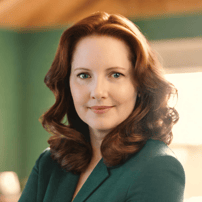
Amber Schroader
CEO & Founder,
Paraben Corporation
With over 30 years of innovation in digital forensics, Ms. Schroader has developed cutting-edge recovery software for everything from smartphones to cloud storage. She is the architect of the "Forensics of Everything" (FoE) framework, a holistic approach to evidence that has set global standards for seizure and processing protocols. Beyond her technical contributions, she is an influential educator and founder of industry certifications, dedicated to shaping the future of the field through her teaching, writing, and speaking.
For more from Amber Schroader, check out the OSINT Cocktail podcast or follow her on LinkedIn.